
Did you know homes with entertainment features like beverage stations can increase in value by up to 10%? This makes these features very popular among homeowners who want to improve their homes.
Having a dedicated area for drinks changes how you entertain guests. It’s great for weekend parties or a quiet night in. A space with running water makes serving drinks easy.
At Local Plumbers 4 U, we’ve helped many homeowners in the Inland Empire add beverage stations. We’ve worked in Corona, Riverside, and San Bernardino counties. We’ve seen how these additions become the heart of entertainment areas.
It’s important to know the water supply needs before starting your project. The right setup is key for function and to avoid future problems. For advice on your needs, call our team at 909-378-9322.
Key Takeaways
- Properly installed beverage stations can increase home value by approximately 10%
- Water line installation requires professional assessment for optimal placement
- Drainage considerations are essential for preventing future plumbing issues
- Local building codes in Inland Empire areas may affect installation requirements
- Professional installation ensures compliance with California plumbing regulations
- Proper water pressure is critical for functionality of additional fixtures
- Consulting with licensed plumbers prevents costly mistakes during installation
Understanding Wet Bar Plumbing Basics
Getting started with a wet bar can seem tough, but knowing the basics is key. A well-set-up wet bar boosts your home’s fun factor and makes hosting easier. Before you start, it’s vital to understand what makes a wet bar work from a plumbing standpoint.
What is a Wet Bar?
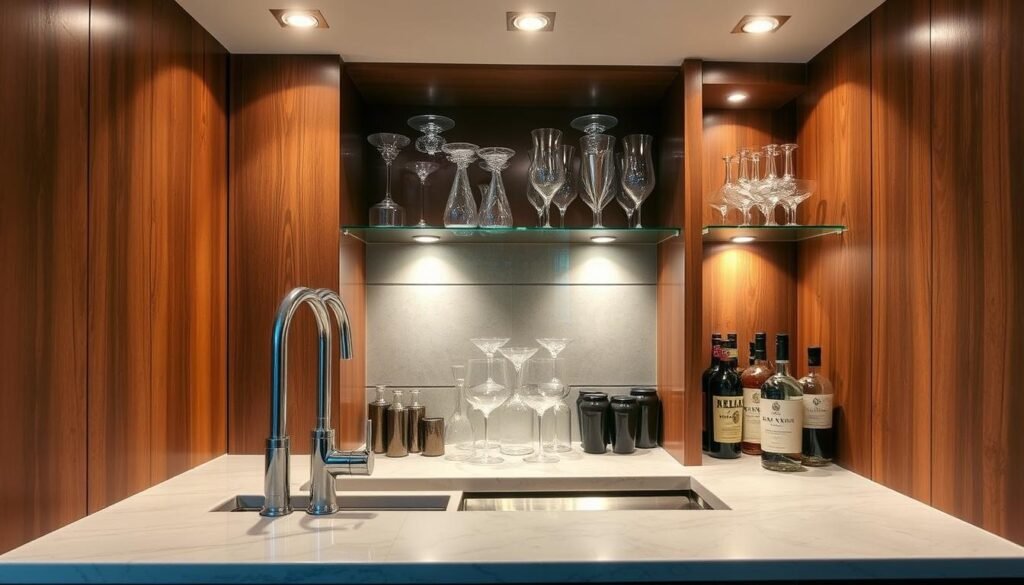
A wet bar is a special area in your home for making and serving drinks. It has a sink with running water. Unlike a dry bar, a wet bar lets you have water right where you’re entertaining.
Having a wet bar means no more kitchen trips when you’re hosting. You can rinse glasses, wash hands, and mix drinks all in one spot. Many people put wet bars in basements, entertainment rooms, outdoor patios, or dedicated bar areas.
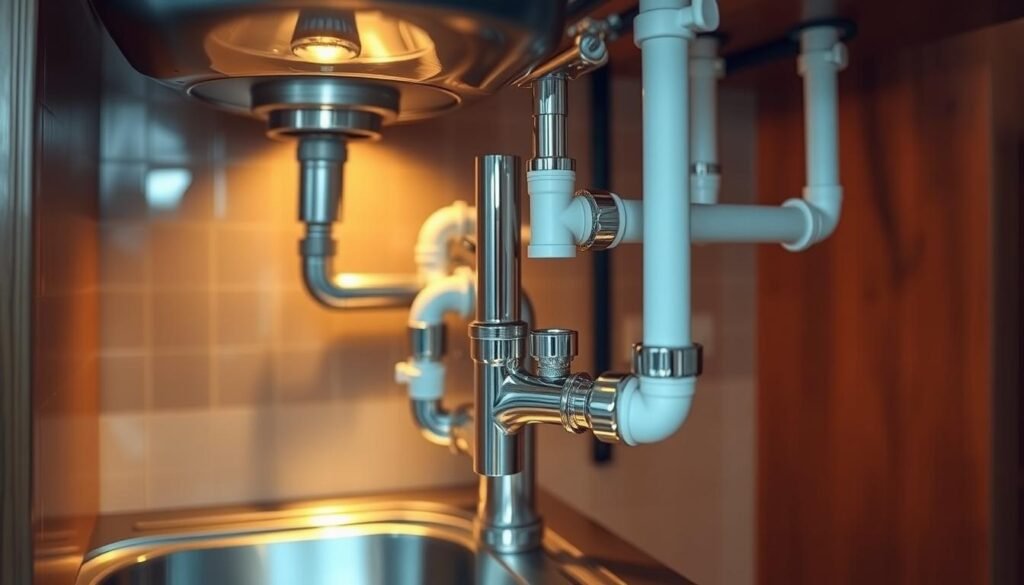
Your wet bar’s usefulness depends on good plumbing. Without it, you just have a fancy cabinet. Thinking about size, placement, and style is important too, along with plumbing.
Key Plumbing Components
Every wet bar needs certain plumbing parts. Knowing these will help you plan better and talk to your plumber more easily.
The sink is the heart of your wet bar’s plumbing. Bar sinks are smaller than kitchen ones, measuring 15-25 inches wide. They can be undermount or drop-in, depending on your look.
Bar faucets are also key. They’re smaller than kitchen faucets and often have pull-down sprayers for easy rinsing. Many people choose these for their flexibility.
| Component | Function | Installation Considerations | Common Options |
|---|---|---|---|
| Bar Sink | Provides water access for mixing drinks and cleanup | Requires proper mounting and sealing | Undermount, Drop-in, Stainless steel, Copper |
| Water Supply Lines | Delivers fresh water to the sink | Must connect to existing plumbing | PEX, Copper, CPVC |
| Drain Lines | Removes wastewater from sink | Requires proper slope and venting | PVC, ABS plastic |
| P-Trap | Prevents sewer gases from entering | Must be accessible for cleaning | PVC, Chrome, Brass |
| Shut-off Valves | Controls water flow to fixtures | Should be easily accessible | Quarter-turn, Compression, Push-fit |
Installing water lines is a key part of wet bar plumbing. You’ll need both hot and cold lines connected to your home’s plumbing. These lines must be the right size, securely attached, and insulated to avoid leaks and ensure water flows well.
Drainage is also critical. Your wet bar needs a drain line that connects to your home’s waste system. This includes a P-trap to keep sewer gases out and proper venting for drainage.
Why Professional Installation Matters
While DIY projects can be fun, wet bar plumbing is best left to pros. Plumbers know how to add new plumbing to your home without problems.
Following plumbing codes is essential when installing a wet bar. Local codes set rules for water lines, drainage, venting, and fixture installation. Pros keep up with these rules and make sure your installation meets them.
Bad plumbing can cause serious issues like water damage, mold, and structural problems. These problems can cost a lot more to fix than hiring a pro in the first place.
Pros can spot issues before they start. They’ll check your home’s plumbing, water pressure, and drainage to make sure your wet bar works right without hurting other fixtures.
When planning your wet bar, talk to a licensed plumber early. They can help you set a budget, timeline, and design that fits your style and plumbing needs.
Essential Plumbing Considerations for Your Wet Bar
When setting up your wet bar, the plumbing is key. It’s what keeps your space running smoothly. Planning these parts well saves you from costly fixes later on.
Choosing the Right Location
Finding the best spot for your wet bar is vital. It affects both cost and how well it works. Try to place it near existing plumbing to save money and effort.
For basement bars, think about how to route drain lines. You might need a pump if gravity drainage isn’t possible.
The most cost-effective wet bar installations are those that tap into existing plumbing systems. This saves money and ensures better performance.
Consider your home’s layout when picking a spot. Your wet bar should be easy to get to but not block the way. Also, think about noise levels. Water sounds or ice maker hums might be distracting in some spots.
Drainage and Ventilation Requirements
Drain lines must be set up right for your wet bar sink. Plumbing codes say vents should be near the trap within 42 inches on a 1.5-inch line. This stops sewer gases and ensures water flows well.
If your bar shares a trap with another fixture, sinks must be at the same level. This prevents backflow problems, which are common with shared plumbing.
Here are some drainage tips to keep in mind:
- P-traps stop sewer gases from getting into your home
- Drain lines need a 1/4-inch slope per foot for good flow
- Make sure to include access panels for future maintenance
- Protect against water damage with moisture barriers around drain connections
Ventilation is also critical but often overlooked. Good venting lets water drain without vacuum or pressure issues. Air admittance valves (AAVs) can be used instead of traditional vent stacks, making installation easier in some cases.
Water Supply Lines and Fixtures
Plan your wet bar’s water system carefully. It needs to support all your fixtures and appliances. Most wet bars use cold water, but adding hot water is common for more uses.
Think about these water supply line elements:
| Fixture/Appliance | Water Requirements | Special Considerations | Recommended Pipe Size |
|---|---|---|---|
| Bar Sink | Hot and cold water | Shutoff valves for each line | 1/2-inch supply lines |
| Ice Maker | Cold water only | Water filter installation | 1/4-inch supply line |
| Dishwasher | Hot water connection | Dedicated circuit needed | 1/2-inch supply line |
| Coffee/Espresso Machine | Cold water line | Water softener recommended | 1/4-inch supply line |
Ice maker plumbing needs special care. These appliances need a dedicated water line with the right pressure. Adding a water filter improves ice quality and extends your appliance’s life. Copper or PEX tubing is best for ice maker connections, not plastic lines.
For wine cooler plumbing, manage condensation well. Wine coolers don’t need water connections but do produce condensation. Some models have self-evaporating systems, while others need a drain line.
Start with leak prevention to protect your investment. Water leak detectors near fixtures can warn you of problems early. Use quality fixtures with ceramic disc valves to avoid drips over time.
Make sure all plumbing connections are easy to access for future maintenance. Hidden leaks can cause a lot of damage before they’re found. Plan your installation with access panels where needed. This will save you trouble if repairs are needed later.
FAQs About Wet Bar Plumbing
Now that you know the basics of wet bar plumbing, let’s tackle some common questions. These might help with your planning.
How Much Does it Cost to Add Wet Bar Plumbing?
The cost to add wet bar plumbing varies. It depends on your location and setup. In the Inland Empire, basic installations near existing lines cost $800-$1,500.
More complex setups with new piping can cost $2,000-$5,000+. Adding features like ice maker connections increases the price. For a custom quote, call Local Plumbers 4 U at 909-378-9322.
What Permits Do I Need?
Most wet bar installations need plumbing permits from your local building department. These permits check if your wet bar meets building codes for drainage and water supply. The process includes inspections to ensure all plumbing considerations are met, including sink installation and drainage requirements.
Can I Install a Wet Bar Myself?
DIY is possible for simple wet bars. But, professional installation is recommended for several reasons. If two sinks share a trap, they must be at the same rim elevation to prevent backups.
Bathroom vanities are usually lower than kitchen cabinets. This affects under-counter appliance installation, like mini-fridges. Professionals also handle condensation management issues that can cause water damage if not addressed properly.
Remember, proper wet bar plumbing makes your space functional and enjoyable. With the right planning and professional help, your wet bar will be a favorite spot in your home for years.
FAQ
How much does it cost to add wet bar plumbing?
FAQ
How much does it cost to add wet bar plumbing?
In the Inland Empire, adding a wet bar costs between 0-
FAQ
How much does it cost to add wet bar plumbing?
In the Inland Empire, adding a wet bar costs between $800-$1,500 if it’s near plumbing. More complex setups or basement installations can cost $2,000-$5,000+. Adding features like ice makers or wine coolers will increase the price. For a custom quote, call Local Plumbers 4 U at 909-378-9322.
What permits do I need for installing a wet bar?
In Corona, Riverside, and San Bernardino, you’ll need plumbing permits for wet bars. Building permits might also be required for structural changes. Check with your local building department first. Our licensed plumbers can guide you through the process.
Can I install a wet bar myself?
DIY fans can tackle some parts of a wet bar install, but plumbing is best left to pros. DIY mistakes can lead to water damage and code issues. Our plumbers ensure your bar meets all codes and offers warranties.
How close does a wet bar need to be to existing plumbing?
There’s no strict distance rule, but being close to plumbing saves money and effort. The farther it is, the more work it needs. Our plumbers can find the best spot for your bar.
What are the drainage requirements for a wet bar sink?
Wet bar sinks need a P-trap to keep sewer gases out. The drain line must be vented and sloped correctly. Basement bars might need a pump system.
Do I need special plumbing for an ice maker or wine cooler?
Yes, ice makers need a dedicated water line, and wine coolers need drain connections. Plan these during the initial install to avoid extra costs. Our plumbers can design a system for your appliances.
What type of sink is best for a wet bar?
Bar sinks are smaller, ranging from 9-18 inches wide. Stainless steel is popular for its durability. Choose based on your needs, style, and budget. A deeper basin is good for filling pitchers.
How can I prevent water damage around my wet bar?
Use waterproof materials and seal plumbing well to prevent water damage. Regularly check for leaks. Our plumbers take steps to prevent leaks during installation.
What are the most common plumbing issues with wet bars?
Common problems include slow drains and leaks. These can be avoided with proper installation. Our plumbers follow codes and best practices.
Can a wet bar be installed in a basement?
Yes, basements are great for wet bars, but they need special plumbing. You’ll likely need a pump system and waterproofing. Our plumbers have experience with basement installations in the Inland Empire.
,500 if it’s near plumbing. More complex setups or basement installations can cost ,000-,000+. Adding features like ice makers or wine coolers will increase the price. For a custom quote, call Local Plumbers 4 U at 909-378-9322.
What permits do I need for installing a wet bar?
In Corona, Riverside, and San Bernardino, you’ll need plumbing permits for wet bars. Building permits might also be required for structural changes. Check with your local building department first. Our licensed plumbers can guide you through the process.
Can I install a wet bar myself?
DIY fans can tackle some parts of a wet bar install, but plumbing is best left to pros. DIY mistakes can lead to water damage and code issues. Our plumbers ensure your bar meets all codes and offers warranties.
How close does a wet bar need to be to existing plumbing?
There’s no strict distance rule, but being close to plumbing saves money and effort. The farther it is, the more work it needs. Our plumbers can find the best spot for your bar.
What are the drainage requirements for a wet bar sink?
Wet bar sinks need a P-trap to keep sewer gases out. The drain line must be vented and sloped correctly. Basement bars might need a pump system.
Do I need special plumbing for an ice maker or wine cooler?
Yes, ice makers need a dedicated water line, and wine coolers need drain connections. Plan these during the initial install to avoid extra costs. Our plumbers can design a system for your appliances.
What type of sink is best for a wet bar?
Bar sinks are smaller, ranging from 9-18 inches wide. Stainless steel is popular for its durability. Choose based on your needs, style, and budget. A deeper basin is good for filling pitchers.
How can I prevent water damage around my wet bar?
Use waterproof materials and seal plumbing well to prevent water damage. Regularly check for leaks. Our plumbers take steps to prevent leaks during installation.
What are the most common plumbing issues with wet bars?
Common problems include slow drains and leaks. These can be avoided with proper installation. Our plumbers follow codes and best practices.
Can a wet bar be installed in a basement?
Yes, basements are great for wet bars, but they need special plumbing. You’ll likely need a pump system and waterproofing. Our plumbers have experience with basement installations in the Inland Empire.