
Did you know that the average American home wastes nearly 10,000 gallons of water annually due to leaks? That’s enough to fill a swimming pool! For many homeowners in Riverside County and San Bernardino, addressing these issues often leads to considering a complete repiping of their property. Understanding the process can make this essential home improvement project much more manageable.
A complete repiping involves replacing all the water supply lines throughout your home. This update typically takes 1-3 days for installation, with some additional time for finishing work. The good news? You won’t be without water for the entire duration, as professional technicians work section by section to minimize disruption to your daily routine.
When you choose Local Plumbers 4 U for your repiping needs in the Inland Empire area, you’re investing in immediate and long-lasting benefits. These include dramatically improved water pressure, elimination of persistent leaks, cleaner water quality, and enhanced overall efficiency. Have questions about whether your home needs this service? Our experts are just a call away at 909-378-9322.
The cost of whole home repiping varies based on several factors. For most properties, repiping costs typically range from $4,000 for smaller homes to $15,000 for larger, with labor making up about 60% of the total expense. The investment pays off through reduced water bills, prevented damage, and increased property value.
Throughout this guide, we’ll walk you through each phase of the process, from initial assessment to final inspection. Whether you own a decades-old house in Corona or a commercial property in San Bernardino experiencing frequent plumbing issues, this information will help you navigate your repiping project with confidence.
Key Takeaways
- Repiping replaces all water supply lines but typically doesn’t include sewer systems
- The process usually takes 1-3 days for installation plus finishing work
- Benefits include improved water pressure, fewer leaks, and better efficiency
- Professional services ensure code compliance and proper installation
- Most homes remain habitable during the repiping process
- Costs vary based on home size, pipe materials, and specific requirements
Understanding the Importance of Plumbing System Replacement
Replacing your home’s plumbing system is a big decision. It affects your daily comfort and your home’s value. Most homeowners don’t think about their pipes until problems happen. Knowing when to replace them can prevent emergencies and save money.
Your plumbing system is like your home’s circulatory system. It brings clean water and takes away waste. When it fails, it affects everything from your morning shower to your utility bills. Replacing it on time can save you thousands and protect your home.
Signs You Need a Replacement
Knowing the signs of a failing plumbing system is key. Your pipes will tell you they’re failing in different ways. Catching these signs early can help you plan for water line replacement instead of dealing with sudden failures.
| Warning Sign | What It Indicates | Urgency Level | Potential Consequences |
|---|---|---|---|
| Frequent leaks | Pipe material degradation | High | Water damage, mold growth, structural issues |
| Discolored water | Pipe corrosion or rust | Medium-High | Health concerns, appliance damage, staining |
| Low water pressure | Pipe blockage or narrowing | Medium | Poor fixture performance, inefficient appliances |
| Increasing water bills | Hidden leaks or inefficiencies | Medium | Financial loss, water waste, possible damage |
| Pipes older than 50 years | End of material lifespan | Medium-High | Increased failure risk, outdated materials (lead, galvanized) |
The age of your plumbing system is also important. Galvanized steel pipes last 40-50 years, while copper can last 50+ years. Lead pipes, found in older homes, are dangerous and should be replaced.
Unusual sounds like banging or rattling when using fixtures often indicate air in the lines or loose pipes. These symptoms may seem minor but frequently signal more significant underlying issues that warrant professional assessment.
Benefits of Replacing Your Plumbing System
Replacing your plumbing system offers many benefits. It improves your daily life and protects your investment in your home.
One major benefit is better water quality. Modern pipes don’t leach contaminants into your water. This is a big improvement for homes with older pipes.
Consistent water pressure is another advantage. New systems keep pressure levels steady, improving your shower and appliance performance. This makes everyday tasks easier.
Energy efficiency also improves with new plumbing. Updated systems have better insulation for hot water lines, reducing energy use. This saves you money on your bills and is better for the environment.
Replacing your plumbing can also increase your home’s value. Buyers often pay more for homes with new plumbing. This investment can add 85-90% of its cost to your home’s value.
Reduced maintenance costs are another benefit. New systems need fewer repairs, saving you money in the long run. Reliable plumbing brings peace of mind to homeowners.
Common Materials Used in New Installations
Choosing the right materials for your plumbing replacement is important. Modern materials last longer and perform better than older ones. Knowing about each option helps you make the best choice for your needs.
| Material | Lifespan | Cost Range | Advantages | Limitations |
|---|---|---|---|---|
| PEX (Cross-linked Polyethylene) | 40-50 years | $0.50-$2 per foot | Flexible, freeze-resistant, easy installation | Can’t be recycled, sensitive to UV light |
| Copper | 50+ years | $2-$4 per foot | Durable, bacteria-resistant, recyclable | Expensive, complex installation, corrosion risks |
| CPVC (Chlorinated PVC) | 30-40 years | $0.40-$1 per foot | Corrosion-resistant, handles hot water well | Brittle in cold, noisy water flow, chemical sensitivity |
| PVC (Polyvinyl Chloride) | 25-40 years | $0.30-$0.50 per foot | Affordable, lightweight, corrosion-proof | Cold water only, rigid, not for hot water lines |
PEX is popular for drain pipe installation because it’s flexible and easy to install. It can bend around corners without needing extra fittings, reducing leaks. It’s also great for cold climates because it resists freezing.
Copper is the most durable option, despite being more expensive. It’s good for drinking water lines because it doesn’t let bacteria grow. Copper lasts for decades, with many installations working perfectly after 50 years.
CPVC is a good middle option for both hot and cold water. It’s more resistant to temperature changes than standard PVC. Its smooth walls also help water flow better over time.
Using the right materials is key to meeting plumbing codes. Local codes dictate what materials to use based on water quality, climate, and soil. Professional plumbers ensure your installation meets these standards, avoiding future problems.
The Plumbing Replacement Process Explained
Replacing your plumbing system is a structured process. It aims to cause little disruption while ensuring quality and efficiency. Whether it’s corroded pipes, leaks, or an upgrade, knowing each step helps you prepare. Let’s explore how professional plumbers replace your plumbing system step by step.
Initial Consultation with Local Plumbers 4 U
Your journey starts with a consultation. Our experienced technicians will discuss your concerns and goals. We tailor our approach to your unique situation, whether it’s leaks or an upgrade.
This meeting has several purposes. It lets us understand your expectations and answer any questions. We also provide clear pricing and financing options to make the upgrade affordable.
“The consultation phase is where we build the foundation for a successful project. By understanding exactly what the client needs and explaining what we can deliver, we create clarity that prevents surprises later in the process.”
For businesses, we discuss how to minimize disruption. For homeowners, we explain how to keep your routine as normal as possible.
Detailed Inspection and Assessment
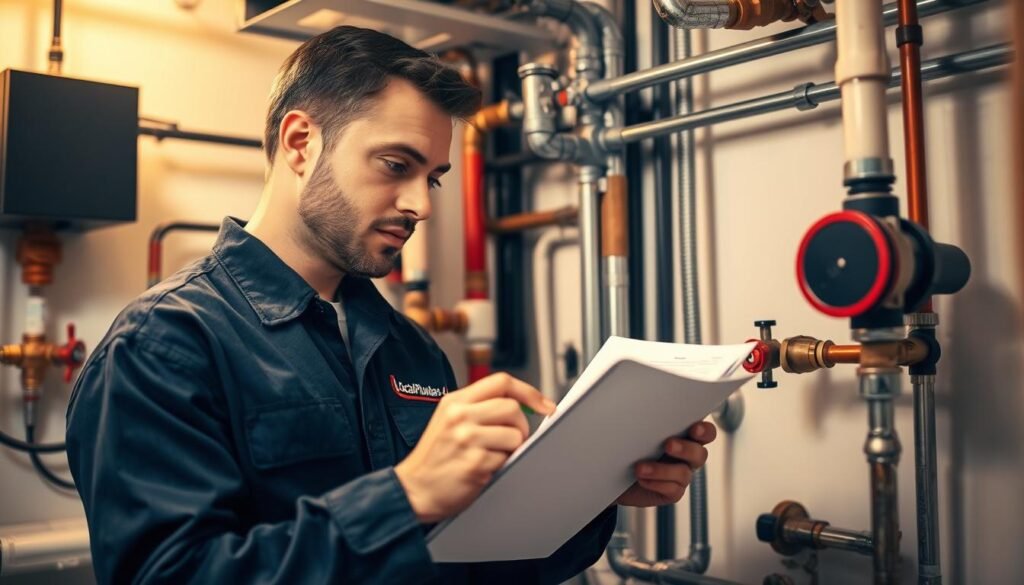
After the consultation, we inspect your plumbing system thoroughly. We examine every part, from main lines to fixture connections. Our team uses special equipment to find hidden problems.
During this assessment, we focus on:
- Pipe material and condition
- Water pressure and flow rate
- Corrosion, leaks, or poor installations
- Integration with renovations
- Building code compliance
This detailed inspection gives us a full picture of your plumbing system. If you’re renovating your bathroom or kitchen, we include these in our assessment. This ensures all systems work well together.
Planning and Scheduling the Replacement
With a clear understanding of your plumbing needs, we create a replacement plan. This plan includes materials, pipe routing, and fixture connections. We also consider special needs like water heater installation or sewer line repair.
Our planning includes several key steps:
- Getting necessary permits
- Ordering quality materials
- Creating a detailed timeline
- Coordinating with other contractors
- Working with your schedule
We know water service interruptions can be inconvenient. So, we plan a schedule that minimizes disruption. For large properties or businesses, we might use a zone-by-zone approach. This allows partial water service to remain available during the project.
The Installation Phase
On installation day, our team follows a detailed process. Before starting, we recommend preparing your property by:
- Removing personal items
- Clearing access paths
- Making water arrangements
- Securing pets
The installation starts with shutting off your water supply and draining the system. Our technicians then remove old pipes while protecting your property. For pipes behind walls, we make targeted access points for easy repair later.
As new pipes are installed, we focus on proper support, insulation, and connections. If you’re installing a water heater, we ensure all safety features are set. For sewer line repairs, we use advanced techniques to minimize disruption.
Our team keeps the work area clean by containing dust and cleaning up daily. This is important for commercial properties that need to look professional.
After installing all new components, we test the system thoroughly. We check every connection for leaks and ensure fixtures work correctly. Only after successful tests do we consider the installation complete.
For wall access points, we recommend drywall specialists for repairs. Many clients choose to do these repairs with other renovation projects for efficiency.
FAQs About Plumbing System Replacement
Got questions about your plumbing system replacement? We’ve got answers to the most common questions from Inland Empire, Riverside County, San Bernardino, and Corona customers. This is about your essential home improvement project.
How Long Does a Plumbing Replacement Take?
The installation usually takes 1-3 days for most homes. Larger homes or complex systems might need up to a week. Preparing your space properly can help speed up the process. Remember, extra time for inspections and wall repairs may extend the timeline.
What is the Average Cost of a Plumbing Replacement?
Costs vary based on your home’s size, pipe materials, and system complexity. Factors affecting price include square footage, fixture count, accessibility challenges, and material selection. Local Plumbers 4 U offers free estimates for all plumbing system replacement guide consultations. Call us at 909-378-9322 to discuss financing options that make this investment manageable.
Will I Need to Vacate My Property During the Replacement?
Most homeowners can stay in their homes during the sewer line repair and replacement process. We typically turn off water during work hours (8am-5pm) but restore service each evening. For multi-day projects, we work section by section to minimize disruption to your daily routine while delivering quality professional plumbing services.
Ready to upgrade your plumbing system? Contact Local Plumbers 4 U at 909-378-9322 for expert service throughout the Inland Empire area.