
A slab leak can become an emergency when it causes active water damage, structural instability, or rapid water loss beneath your foundation. Understanding the severity early helps prevent long-term property damage and costly repairs. At Local Plumbers 4 U, we help homeowners across the Inland Empire determine when a slab leak requires immediate attention and when it can be scheduled for regular service. For comprehensive solutions to detect and address any water leaks in your home, visit our water leak detection page.
A slab leak refers to water leaking from pipes embedded within or underneath your home’s concrete foundation slab. These foundations are common throughout Southern California due to our climate and soil conditions. While not every slab leak constitutes an emergency, certain situations demand urgent professional attention to prevent extensive damage to your property’s structure, flooring, and even your family’s health.
Is a slab leak always an emergency?
Not all slab leaks require emergency response. The urgency depends on factors like water volume, location, and visible damage. Small, slow leaks may be scheduled for regular service, while active flooding, foundation shifting, or rapidly increasing water bills indicate an emergency requiring immediate attention.
How quickly can a slab leak cause damage?
Damage timelines vary based on leak severity. Minor leaks may take weeks or months to cause noticeable damage, while major leaks can flood your home and damage your foundation within hours. High-pressure hot water lines can cause particularly rapid damage by eroding soil and creating voids beneath your foundation.
Can a slab leak weaken a foundation?
Yes, slab leaks can significantly weaken your foundation. Water erodes the soil supporting your foundation, creating voids that lead to settling, cracking, and structural instability. In Southern California’s expansive soils, this process can be accelerated as the soil expands when wet and contracts when dry.
What are early warning signs of a slab leak?
Early signs include unexplained increases in water bills, the sound of running water when fixtures are off, warm spots on floors (for hot water leaks), decreased water pressure, and damp or warped flooring. Catching these signs early can prevent an emergency situation.
Should I shut off the water if I suspect a slab leak?
If you suspect a significant slab leak, shutting off your home’s main water supply is a prudent first step until a professional can assess the situation. This prevents further water damage while you arrange for emergency plumbing service.
Does insurance cover slab leak damage?
Many homeowner insurance policies cover sudden and accidental water damage from slab leaks, but coverage varies. Most policies cover damage resulting from the leak but not the repair of the actual pipe. Check your specific policy and document all damage for potential claims.
What Makes a Slab Leak an Emergency
Not every slab leak requires immediate attention, but certain conditions elevate the situation to emergency status. Understanding these factors helps homeowners make informed decisions about when to call for emergency leak repair.
Water Pressure Factors
High water pressure significantly increases the emergency nature of a slab leak. Pressurized water can rapidly erode soil beneath your foundation and cause extensive damage in hours rather than days. Leaks in main supply lines or high-pressure sections of your plumbing system typically constitute emergencies due to the volume and force of water being released.
Soil Saturation Concerns
Southern California’s soil conditions play a crucial role in determining emergency status. Our region’s clay-rich soils expand when saturated, creating upward pressure on your foundation. This heaving action can crack slabs, walls, and create uneven floors. Once soil becomes fully saturated, water may begin pooling inside your home, indicating an emergency situation requiring immediate attention.
Structural Risk Assessment
When a slab leak compromises your home’s structural integrity, it becomes an undeniable emergency. Signs include visible foundation cracks wider than 1/4 inch, doors that no longer close properly, uneven floors, or separation between walls and ceilings. These symptoms indicate the foundation is shifting due to water damage and require immediate professional intervention.
Concerned about a potential slab leak emergency?
Our experienced technicians can quickly assess your situation and provide emergency repairs if needed.
Warning Signs of a Slab Leak
Recognizing the early warning signs of a slab leak can help you address the issue before it becomes a full-blown emergency. Be alert to these indicators that may signal a leak beneath your foundation:
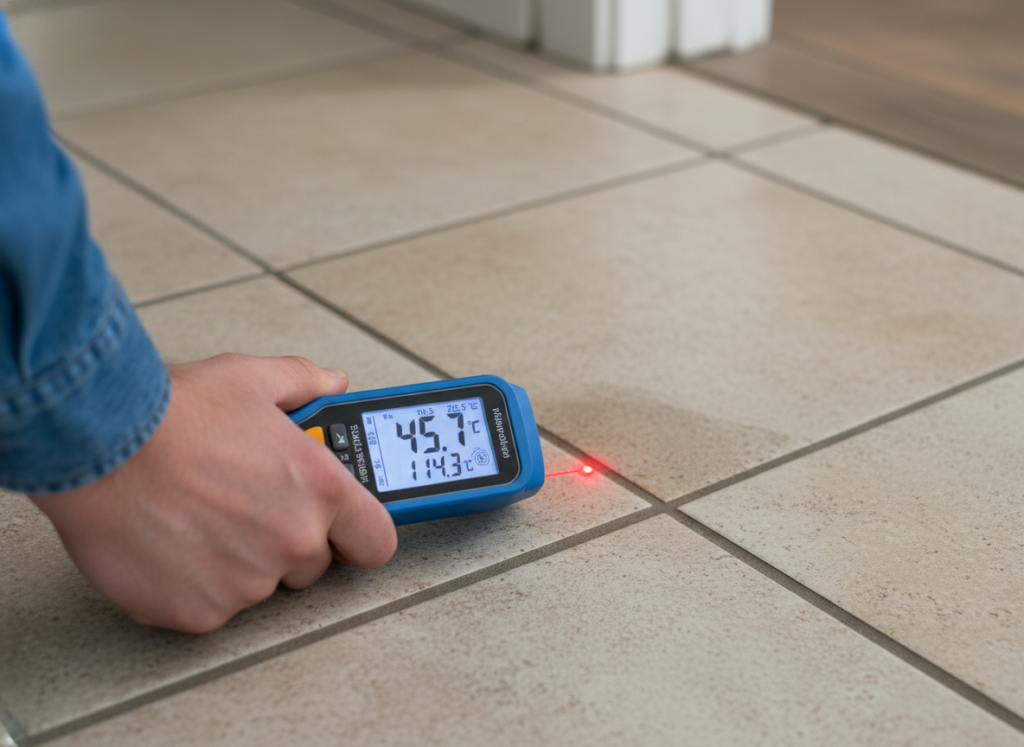
- Warm or hot spots on flooring – Particularly noticeable on tile or hardwood floors, these warm areas indicate a hot water line leak beneath your foundation. The heat rises through the concrete, creating a detectable temperature difference.
- Unexplained increases in water bills – A sudden spike in your water bill without a corresponding increase in usage is often the first sign of a slab leak. Even small leaks can waste thousands of gallons monthly.
- Sounds of running water when fixtures are off – If you hear water flowing when all taps and appliances are turned off, it likely indicates a pressurized leak. Listen carefully near floor areas, especially at night when ambient noise is reduced.
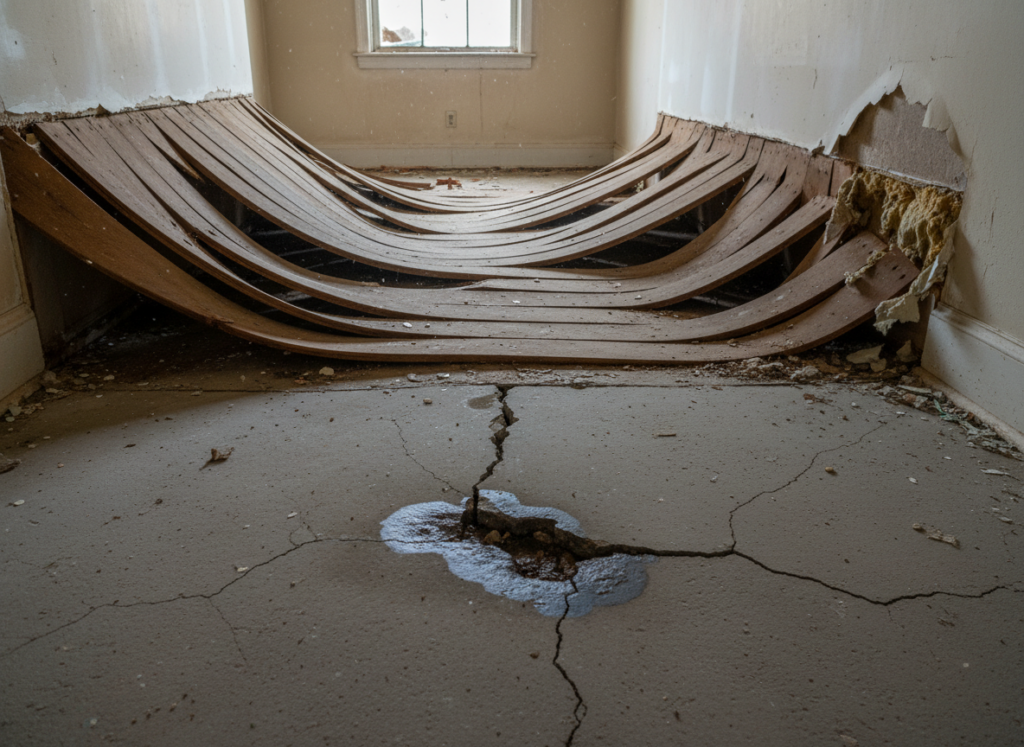
- Cracks in flooring, walls, or foundation – As water erodes the soil supporting your foundation, cracks may develop in floors, walls, or the foundation itself. These structural changes indicate potentially serious damage.
- Mold, mildew, or musty odors – Persistent moisture creates ideal conditions for mold growth. Musty odors or visible mold along baseboards often indicate a long-standing slab leak that requires immediate attention.
- Low water pressure throughout the home – A significant leak can reduce water pressure to fixtures throughout your home as water diverts through the damaged pipe instead of reaching your faucets and appliances.
Emergency Warning: If you notice water pooling on floors, hear rushing water sounds, or see rapidly spreading cracks in your foundation, these are signs of an active emergency that requires immediate professional attention. Contact emergency plumbing services right away.
How Slab Leaks Damage Foundations
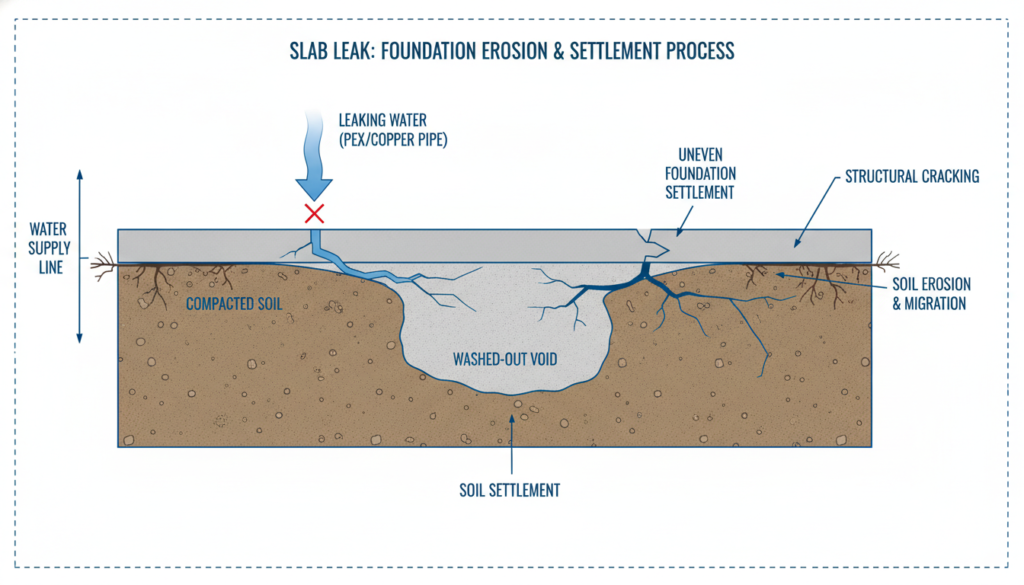
Understanding the mechanics of how slab leaks damage foundations helps clarify why some situations constitute true emergencies. The process typically follows a predictable pattern that can accelerate rapidly under certain conditions.
The Erosion Process
When water leaks beneath your foundation, it follows the path of least resistance through the soil. Over time, this water flow creates channels and washes away soil particles, forming voids beneath your concrete slab. Without proper support, the slab begins to crack and settle unevenly, transferring stress to your home’s entire structure.
Soil Expansion and Contraction
Southern California’s clay-rich soils are particularly problematic when it comes to slab leaks. These soils expand significantly when wet and contract when dry. This continuous expansion and contraction cycle puts enormous pressure on your foundation, accelerating damage from even small leaks. During rainy seasons, this problem can compound as naturally saturated soils have reduced capacity to absorb additional water from leaks.
Structural Chain Reaction
Foundation damage rarely remains isolated. As your foundation shifts, it creates a chain reaction throughout your home’s structure. Wall cracks develop as they bear uneven loads, door frames warp making doors difficult to open or close, and plumbing connections may break, creating additional leaks. In severe cases, roof structures can be compromised as the entire home shifts on its damaged foundation.
According to the Plumbing-Heating-Cooling Contractors Association, foundation damage from unaddressed slab leaks ranks among the most expensive home repairs, often costing tens of thousands of dollars compared to the relatively modest cost of early leak detection and repair.
Emergency Slab Leak Repair vs Non-Urgent Situations
Not all slab leaks require emergency response. Understanding the difference between urgent and non-urgent situations helps homeowners make appropriate decisions about timing and service needs.
| Factor | Emergency Situation | Non-Urgent Situation |
| Water Volume | Active flooding, standing water, or audible rushing water | Slight moisture, small damp spots, or minimal seepage |
| Structural Signs | Visible foundation movement, large cracks appearing suddenly | No visible structural changes or very small, stable cracks |
| Water Bill Impact | Dramatic increase (50%+ over normal) | Slight to moderate increase (10-20% over normal) |
| Water Pressure | Significant drop throughout the home | Minor pressure fluctuations |
| Mold Presence | Visible spreading mold or strong musty odors | No visible mold or odors |
Cost Implications of Emergency vs. Scheduled Repairs
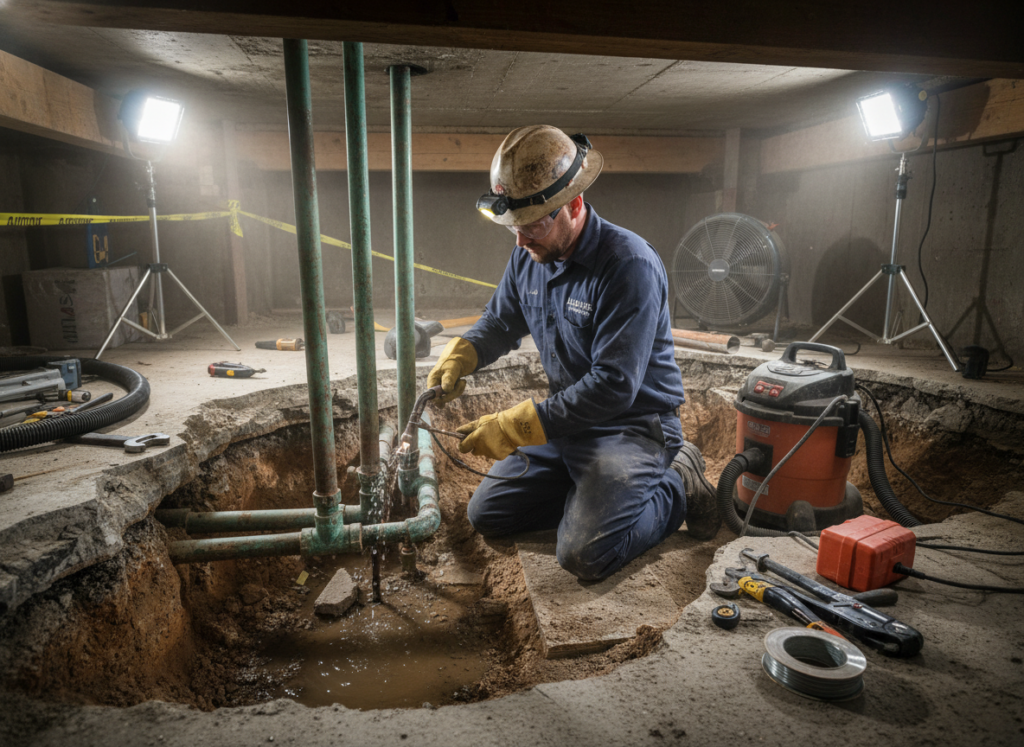
Emergency slab leak repairs typically cost more than scheduled services due to after-hours labor rates and the urgent nature of the work. However, delaying necessary repairs can lead to substantially higher costs from water damage, mold remediation, and foundation repairs. When considering emergency plumbing costs, weigh them against the potential for escalating damage if repairs are postponed.
Not sure if your slab leak is an emergency?
Our experienced technicians can help assess your situation and recommend the appropriate response.
Professional Detection and Repair Process
Professional slab leak detection and repair requires specialized equipment and expertise. Understanding this process helps homeowners know what to expect when facing a potential slab leak emergency.
Advanced Detection Methods
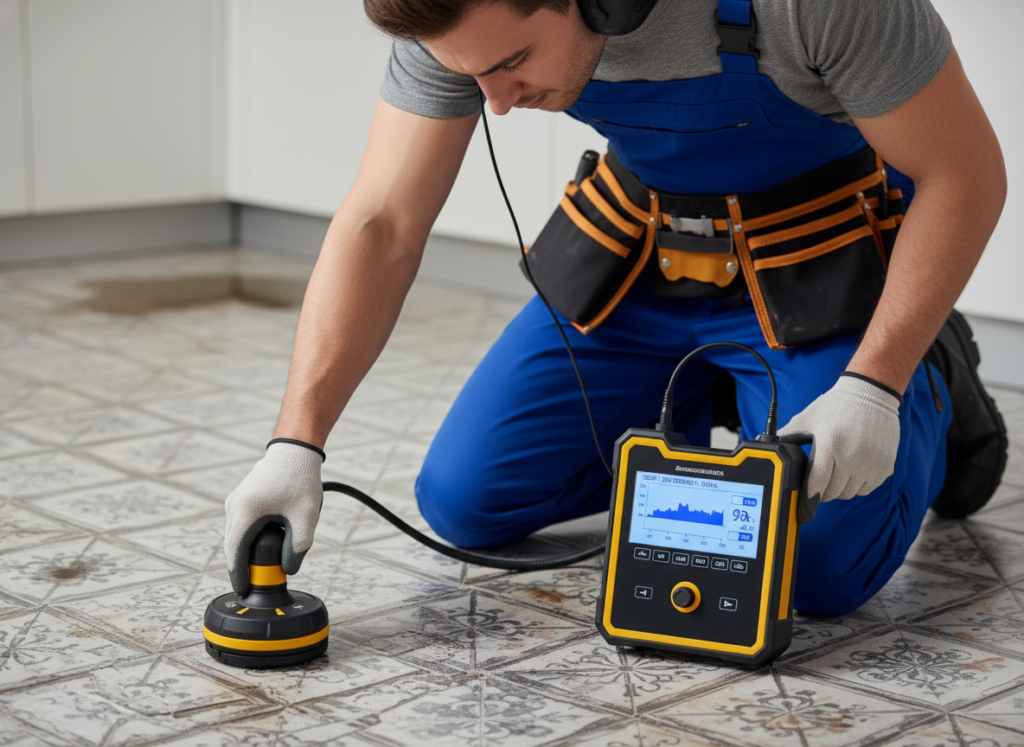
Modern plumbing professionals use non-invasive technologies to precisely locate slab leaks without unnecessary damage to your home:
- Acoustic leak detection – Highly sensitive listening equipment amplifies the sound of water escaping from pipes, even through concrete.
- Infrared thermography – Thermal imaging cameras detect temperature differences in your flooring caused by leaking water.
- Pressure testing – Controlled tests measure pressure loss in isolated sections of plumbing to confirm leaks and their approximate locations.
- Moisture mapping – Electronic moisture meters identify areas of elevated moisture content in and around your foundation.
Repair Options Based on Severity
Once a slab leak is located, professionals will recommend the most appropriate repair method based on the leak’s severity, location, and your home’s specific conditions:
Spot Repair
For isolated, accessible leaks, a targeted repair may be possible. This involves creating a small access point in the foundation directly above the leak, repairing the specific section of pipe, and then restoring the concrete. This is often suitable for non-emergency situations with precisely located leaks.
Pipe Rerouting
Rather than accessing pipes under the slab, this method involves installing new piping through walls, ceilings, or attic spaces to bypass the damaged section. This is less invasive than breaking through concrete and can be an excellent option for emergency situations where multiple leaks are suspected.
Complete Repiping
In cases of extensive damage or older plumbing systems prone to multiple leaks, complete repiping may be recommended. This comprehensive solution replaces vulnerable pipes with modern materials less susceptible to leaks, providing long-term protection against future emergencies.

Service Areas We Cover
Local Plumbers 4 U provides emergency and scheduled slab leak detection and repair services throughout Southern California, with specialized knowledge of local building practices, soil conditions, and common plumbing challenges in each area we serve.
Corona
Our headquarters location provides rapid response times throughout Corona and surrounding communities. We understand the unique challenges of homes in this area, including the prevalence of slab foundations and local water quality issues that can contribute to pipe corrosion.
Inland Empire
Serving communities throughout the Inland Empire region with comprehensive slab leak detection and emergency repair services. Our technicians are familiar with the diverse housing stock and foundation types found throughout this expansive area.
Riverside County
From older homes in established neighborhoods to newer developments, our Riverside County service area covers diverse properties with varying plumbing systems and foundation designs. We bring specialized equipment to address the unique challenges in each community.
San Bernardino County
Our San Bernardino County service area extends to communities throughout the region, with technicians who understand the local soil conditions and common foundation issues that can complicate slab leak detection and repair.
Experiencing a slab leak emergency in your area?
Our local technicians are ready to respond quickly with the right equipment and expertise.
When to Act: Protecting Your Home from Slab Leak Damage
Determining whether a slab leak constitutes an emergency requires careful assessment of several factors. Active flooding, rapidly developing structural issues, and significant water loss are clear indicators that immediate professional attention is needed. Even seemingly minor leaks can quickly escalate into emergencies if left unaddressed, particularly in Southern California’s challenging soil conditions.
At Local Plumbers 4 U, we recommend erring on the side of caution when you notice potential signs of a slab leak. Our experienced technicians can quickly assess your situation, determine the severity, and recommend the most appropriate course of action—whether that’s emergency repair or scheduled service.
Remember that early detection and prompt response are your best defenses against costly water damage and foundation problems. If you suspect a slab leak in your Corona, Inland Empire, Riverside County, or San Bernardino County home, don’t hesitate to contact us for professional assistance.
Need expert slab leak detection or repair?
Our team is ready to help with both emergency and non-emergency situations throughout the Inland Empire.