
Did you know adding a new bathroom can increase your home’s value by over 50%? This is one of the best home upgrades you can make. It’s not just about increasing your home’s worth. It’s also about making your mornings easier.
At Local Plumbers 4 U, we’ve helped many homeowners in the Inland Empire CA area with their bathroom projects. We know that choosing the right location is key to saving money.
Many people don’t know that you can use your home’s existing plumbing for a new bathroom. Even if it’s not right next to where you want it. Closets, hallways, and parts of big bedrooms can be great for a new bathroom with the right help.
The process of adding a bathroom involves several important steps. From the first meeting to installing the fixtures. Getting help from professionals ensures your bathroom meets all the rules and works well. For advice on your project, call us at 909-378-9322. We can help with both homes and businesses.
Key Takeaways
- Bathroom additions typically recoup over 50% of costs when selling property
- Proximity to existing plumbing affects installation costs but isn’t always limiting
- Unused spaces like closets and hallways can be converted into functional bathrooms
- Proper ventilation requires access to exterior walls or roof
- Professional consultation helps ensure code compliance and optimal design
- Both homeowners and business owners benefit from strategic bathroom additions
Understanding the Basics of Bathroom Plumbing
Learning about bathroom plumbing is key to a successful home renovation. Adding a new bathroom can be tough, but with the right knowledge, it’s doable. Before picking fixtures or planning layouts, it’s vital to grasp how plumbing works.
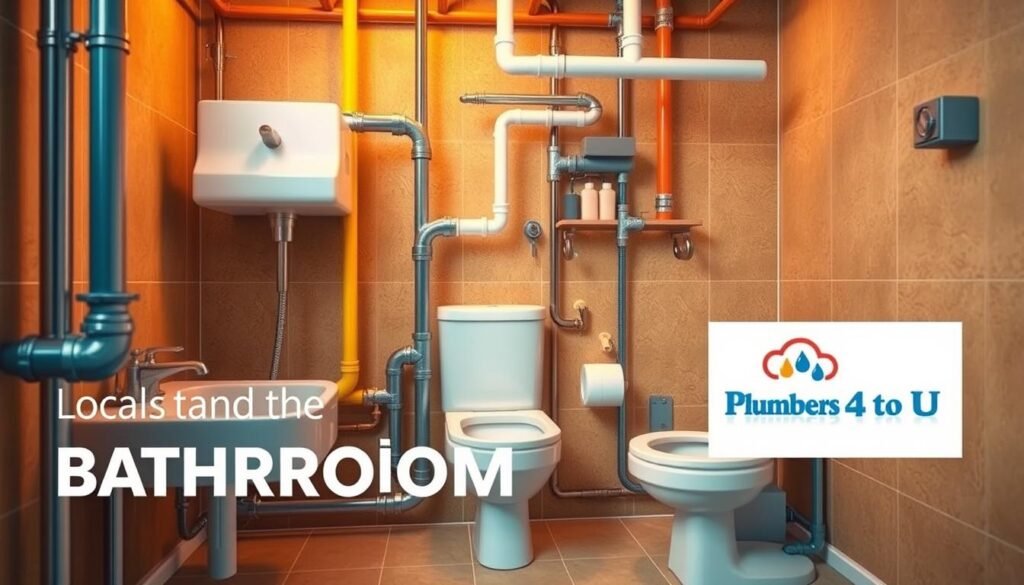
A bathroom’s plumbing system has three main parts. The water supply brings clean water to your fixtures. The drainage system removes waste water safely. The ventilation system keeps sewer gases out of your home. Knowing how these systems work helps you make smart choices.
Key Components of Bathroom Plumbing
Every bathroom needs a few key parts to work right. The supply lines, made of copper, PEX, or CPVC, carry fresh water. These plumbing pipes need tight connections to avoid leaks. Hot water lines connect to your water heater before reaching the bathroom.
The drainage system uses gravity to move waste water. It needs the right slope for efficient flow. A P-trap, a curved pipe, keeps sewer gases out by holding water.
The vent stack is also important. It goes through your roof, letting air in and waste water out. According to bathroom layout specifications, good venting is key for code compliance and fixture performance.
| Plumbing Component | Primary Function | Common Materials | Key Considerations |
|---|---|---|---|
| Supply Lines | Deliver clean water to fixtures | Copper, PEX, CPVC | Pressure-rated, smaller diameter |
| Drain Lines | Remove waste water | PVC, ABS | Gravity-dependent, proper slope required |
| Vent Stack | Release gases, allow air flow | PVC, ABS | Must extend through roof |
| P-Trap | Block sewer gases | PVC, ABS, Chrome | Required for each fixture |
Essential Tools for Your Bathroom Project
Having the right tools makes plumbing easier. A pipe cutter is essential for clean cuts. You’ll also need wrenches for connecting pipes, including pipe wrenches and adjustable wrenches.
For copper pipes, you’ll need soldering tools. PEX pipes require crimping tools. Measuring tools like a tape measure and level are important for alignment. A drain snake helps with clogs.
“The difference between a professional-looking bathroom installation and an amateur one often comes down to having the right tools and knowing how to use them properly.”
For finding leaks, keep a pressure gauge and test plugs handy. Quality tools from Local Plumbers 4 U will last through your project and future maintenance.
Common Plumbing Terminology You Should Know
Knowing plumbing terms helps you talk to contractors and use DIY resources. Here are some key terms:
- Rough-in: The initial installation of plumbing pipes and fixtures before walls and floors are finished
- Fixture units: A measurement used to calculate the load on your plumbing system
- Wet wall: A wall containing plumbing pipes
- Shutoff valve: A valve that stops water flow to a specific fixture
- Backflow: The unwanted reverse flow of water in a plumbing system
When picking plumbing supplies, you’ll see terms like “nominal pipe size.” Knowing about compression fittings and soldered joints helps you choose the right connection method.
Water pressure is measured in pounds per square inch (PSI). Most homes need 40-80 PSI for good fixture performance. Drain lines should slope ¼ inch per foot for proper waste removal.
With this knowledge, you’re ready to plan your bathroom layout and design. This foundation will guide your decisions and help you communicate with professionals for your plumbing installation.
Planning Your Bathroom Layout and Design
A well-designed bathroom balances function, comfort, and style. It also makes the most of the space available. Whether you’re adding a bathroom to your home in the Inland Empire or setting up facilities in a commercial property in Corona, careful planning is key. It helps avoid costly mistakes and ensures your new bathroom meets your needs for years.
The planning stage is where dreams and reality meet. You’ll need to think about practical things like plumbing access and aesthetic choices that make the space welcoming. Let’s look at how to tackle this important part of your bathroom project.
How to Choose a Location for Your New Bathroom
Finding the perfect spot for your new bathroom involves considering several factors. For those in Riverside County and San Bernardino, knowing local building codes is essential. These rules can affect where and how you can add plumbing fixtures.
Being close to existing plumbing is a big cost factor. The closer your new bathroom is to water supply lines, drain pipes, and vent stacks, the cheaper it will be. Often, placing your new bathroom back-to-back with an existing one or directly above or below it can save thousands in plumbing costs.
When evaluating bathroom locations, remember that water always flows downhill. Gravity-fed drainage systems are more reliable and less expensive than those needing pumps or complex solutions.
For homes on a concrete slab, common in the Inland Empire, you might convert a garage, add a powder room under a staircase, or repurpose a closet. Basement additions are popular for homes with basements, as they often have the space and access to main drain lines.
Commercial property owners in Corona CA have extra considerations, like ADA compliance. Customer and employee bathrooms must meet specific accessibility standards, which affect both location and layout choices.
| Location Factor | Ideal Scenario | Challenges | Cost Impact | Suitability Score (1-10) |
|---|---|---|---|---|
| Proximity to existing plumbing | Adjacent to water/drain lines | Requires new supply/drain lines | High savings when close | Score based on distance |
| Available space | 35+ sq ft for full bath | Space constraints limit fixtures | Minimal impact | Score based on square footage |
| Structural modifications | No load-bearing walls affected | Requires engineering solutions | Significant cost increase | Score based on complexity |
| Ventilation options | Exterior wall for window/fan | Requires ductwork installation | Moderate impact | Score based on ventilation ease |
| Privacy considerations | Separated from living areas | Near high-traffic zones | Minimal impact | Score based on location privacy |
Factors to Consider in Your Bathroom Design
Once you’ve picked a location, focus on design elements that make your bathroom both useful and appealing. For Inland Empire homeowners, think about how the local climate might influence your choices.
The type of bathroom you’re creating will determine your fixture needs. A full bathroom usually has a toilet, sink, shower, and possibly a tub. A powder room might only have a toilet and sink. Your available space and budget will guide these decisions.
When choosing fixtures, consider water efficiency, which is key in Southern California. Low-flow toilets, water-saving showerheads, and faucet aerators can cut water use without sacrificing performance.
Ventilation is also critical, given our warm climate. Proper ventilation prevents moisture buildup, which can lead to mold and mildew. If an exterior window isn’t possible, install a high-quality exhaust fan vented to the outside.
For commercial properties in Corona CA, durability is key. Commercial-grade fixtures and materials may cost more upfront but last longer and need less maintenance. Consider common bathroom floor plans that improve traffic flow while keeping privacy.
Effective Space Utilization Tips
To maximize functionality in your bathroom, plan carefully, even in small spaces. Here are some space-saving techniques that work well in Riverside County homes:
- Corner sinks free up traffic lanes and create more usable floor space
- Wall-mounted toilets and floating vanities create the illusion of more floor area
- Pocket doors eliminate the swing space needed for traditional doors
- Shower niches provide storage without protruding into the shower space
- Vertical storage solutions utilize wall space efficiently
For tricky spaces, creative solutions can turn unusable areas into functional bathrooms. Consider converting a closet into a powder room, using space under stairs, or expanding an existing bathroom by borrowing space from an adjacent room.
When planning your layout, follow these minimum clearance guidelines for comfort and functionality:
- Allow at least 30 inches of clearance in front of fixtures
- Maintain 15 inches from the centerline of a toilet to any side wall
- Provide at least 24 inches of clear space in front of a shower entry
- Keep 4 inches minimum between dual sinks
- Ensure 60 inches of turning radius for wheelchair accessibility (ADA requirement)
Future-proofing your bathroom design is vital for homeowners in retirement communities throughout San Bernardino. Incorporating aging-in-place features like grab bars, curbless showers, and comfort-height toilets now can save on costly renovations later.
Remember, proper planning at this stage prevents the most common and costly mistakes in bathroom addition projects. Taking the time to thoroughly evaluate your options and create a detailed plan will result in a bathroom that meets your needs now and in the future.
Installation Tips for New Bathroom Plumbing
Installing bathroom plumbing right is key to a working, code-compliant bathroom. Whether you do it yourself or hire pros, knowing the process is important. In the Inland Empire, water pressure and local codes add to the importance of proper installation.
Start by checking your current plumbing setup. At Local Plumbers 4 U, we suggest talking to a plumbing contractor. They can help find the best spots to connect to your home’s plumbing. This step can save you time and money.
Step-by-Step Guide to Installing Bathroom Fixtures
Installing bathroom fixtures needs careful planning and precise work. The process follows a sequence to ensure everything works well together. This approach helps avoid common problems like leaks or issues with how things work.
- Rough-in plumbing: This first step is about putting in the drain, waste, and vent lines before walls and floors are done. Getting the measurements right is key here.
- Water supply lines: Put in the hot and cold water lines to each fixture spot, making sure there’s enough water pressure.
- Fixture installation: Put toilets, sinks, showers, and tubs in place as the manufacturer says.
- Final connections: Connect the fixtures to the supply and drain lines, then check for leaks and make sure everything works right.
- Inspection: Have someone check your work to make sure it meets local building codes.
If you’re in Riverside County and want to do the installation yourself, know what you can handle and what needs a pro. You might install some fixtures yourself, but vent and drainage systems should be done by licensed pros to follow codes.
| Installation Aspect | DIY Suitable | Professional Recommended | Code Considerations |
|---|---|---|---|
| Sink Installation | Yes, with basic plumbing knowledge | For complex configurations | Trap requirements, venting |
| Toilet Installation | Yes, for replacements | For new drain line installations | Flange height, wax ring seal |
| Shower/Tub Installation | Simple replacements only | Highly recommended | Waterproofing, slope requirements |
| Drain/Vent System | Not recommended | Essential | Strict code requirements |
| Water Supply Lines | Simple connections only | For main line connections | Pressure testing required |
Best Practices for Pipe Routing and Venting
Good pipe routing is key to avoiding plumbing problems in your new bathroom. Planning well can cut down on maintenance and make your plumbing system more efficient. Keep these principles in mind when designing your bathroom’s plumbing layout.
Try to avoid pipe bends as much as you can. Each bend can cause clogs and reduce water flow. For drain pipes, keep a slope of ¼ inch per foot to ensure waste flows well without problems.
Venting is very important but often overlooked by DIY installers. Every fixture needs proper venting to prevent slow drains and gurgling sounds. In Corona and nearby, building codes have rules for vent pipe sizes and distances.
“The most common mistake we see in DIY bathroom installations is improper venting. Without adequate venting, even the best fixtures won’t drain properly, leading to frustration and eventual repairs.”
Make sure to install access points in good spots for future maintenance without having to tear down walls. This small step can save a lot of money later. For homes in the Inland Empire, add insulation around pipes in exterior walls to prevent freezing in cold snaps.
Troubleshooting Common Plumbing Issues
Even with careful planning, plumbing problems can happen during your bathroom installation. Spotting and fixing these issues quickly can prevent damage and keep your project on track. Here are solutions to common problems we’ve seen in hundreds of bathroom installations in San Bernardino and Riverside County.
- Leaking connections: Often caused by bad sealing or over-tightening. Take apart the connection, check for damage, apply new thread tape, and put it back together carefully.
- Slow drains: Usually means the drain slope or venting is wrong. Check that your drain slope is ¼ inch per foot and vents are installed and clear.
- Toilet rocking: This is often due to an uneven floor or wrong wax ring. Use shims to level the toilet and make sure the wax ring seals well.
- Water hammer: This banging noise happens when water stops suddenly. Put water hammer arrestors near valves that close quickly, like those on washing machines or dishwashers.
Before finishing your bathroom plumbing installation, test everything thoroughly. Run water through each fixture, check for leaks at all connections, and make sure drainage works right. This detailed testing can find problems while they’re easy to fix.
Remember, plumbing installation must follow local building codes. In Corona CA and nearby, there are specific rules for venting, drainage slopes, and water supply. Working with a skilled plumbing contractor ensures your installation will pass inspection the first time, saving you time and hassle.
Frequently Asked Questions About Bathroom Plumbing
Homeowners often wonder about costs, permits, and practical tips for bathroom renovations. We answer the most common questions from clients in the Inland Empire.
How Much Does It Cost to Add a New Bathroom?
Adding a new bathroom in Riverside County can cost between $5,000 and $35,000. Basic half-baths start at the lower end, while luxury bathrooms with top-notch fixtures cost more. Important factors include:
• Location within your home (basement vs. main floor)
• Size of the bathroom
• Quality of fixtures and materials
• Plumbing accessibility
At Local Plumbers 4 U, we give detailed cost estimates for your bathroom project.
What Permits Are Needed for Plumbing Work?
Most bathroom additions in San Bernardino and Riverside County need several permits:
• Building permits for structural changes
• Plumbing permits for water lines and drainage
• Electrical permits if adding outlets or lighting
Permit rules differ by city, with some being stricter. A licensed plumbing contractor ensures your project follows local codes. Local Plumbers 4 U (909-378-9322) guides you through the permitting process in our bathroom renovation services.
Remember, proper permits safeguard your investment. They make sure your new bathroom is safe, functional, and increases your property’s value.