
Average cost to fix a slab leak in Corona, CA depends on where the leak is, the pipe material and condition, the detection method used, and whether foundation access or flooring restoration is required. Typical baseline: $500–$4,000 for most repairs; extremes for major foundation work or full repiping can reach $10,000 or more (data and local pricing references updated Feb 2026).
- Quick estimate: detection $150–$400; spot repair $500–$1,500; reroute/repipe $1,500–$10,000+
- Common cause: corrosion, shifting soil, or high pressure that damages pipes under the concrete slab
- Example: an edge slab leak with hardwood flooring — detection $200, spot repair $900, flooring restore $1,200 ≈ $2,300 total
If you suspect a slab leak in your home, don’t wait — early detection limits water damage and foundation repair costs. Call 909-378-9322 or request a free inspection to schedule a technician. Download our free Slab Leak Emergency Checklist to document meter readings, photos, and actions to give to your insurer.
How much does it cost to fix a slab leak in Corona?
Short answer: Most slab leak repairs in Corona run between $500 and $4,000; major foundation work or full-home repiping can push totals to $10,000 or more (data updated Feb 2026).
- Typical edge spot repair: $500–$1,500 (often completed in a day)
- Central slab repair with excavation: $2,000–$4,000+
- Partial reroute/repiping: $1,500–$5,000 depending on access and materials
Final slab leak cost depends on detection accuracy, repair approach (spot repair vs reroute vs repipe), pipe material, and extent of water damage or flooring/foundation restoration needed.
When is a slab leak an emergency?
Short answer: Treat it as an emergency and call immediately if you see standing water, hear constant running water with no fixtures on, notice floor heaving, detect sudden foundation cracks, or see a large unexplained spike in your water bill.
These signs indicate active, ongoing water loss that can rapidly cause structural damage and accelerate mold growth. Immediate steps: shut off the main water supply if safe, document the scene (photos, meter readings), and call an emergency plumber.
What to look for (quick checklist):
- Standing water or pooling on floors
- Audible running water with no fixtures in use
- Warm spots on floors (hot-water line leaks)
- New or worsening floor cracks, bulging, or heaving
- Unexplained surge in your water bill
- Musty odors or visible mold near the floor or baseboards
Does homeowners insurance cover slab leak repairs?
Short answer: Insurance commonly covers resulting water damage (drywall, flooring, mold remediation) from a sudden slab leak but may exclude the cost to replace the pipe for wear-and-tear. Always check your specific policy.
Practical tips for claims:
- Call your insurer early to report the loss and ask about covered line items.
- Document everything: dated photos, meter readings, and written estimates.
- Get an itemized quote that separates detection, leak repair, concrete work, and restoration — insurers often reimburse damage/remediation differently than pipe replacement.
Is slab leak detection included in repair cost?
Short answer: Detection is usually billed separately (commonly $150–$400), although many local plumbers will credit the detection fee toward the final repair if you hire them.
Detection methods:
- Electronic acoustic leak detection — low-cost first pass (~$150–$250)
- Thermal imaging for hot-water lines
- Pressure testing to confirm active loss
- Video pipe inspection when accessible
Why pay for detection? Accurate slab leak detection reduces unnecessary concrete cutting, lowers excavation and restoration costs, and can reduce the overall leak repair cost by helping the plumber target the exact pipe.
Is repiping more expensive than spot repair?
Short answer: Yes — spot repairs typically cost $500–$1,500 while rerouting or complete repiping commonly ranges from $1,500 up to $10,000 depending on home size, materials (PEX vs copper), and access.
Compare & contrast (quick):
- Spot repair: Lower upfront cost, fastest turnaround, best when the leak is isolated.
- Reroute/partial repipe: Higher upfront cost, avoids repeated excavation, good when a few sections fail.
- Complete repipe: Highest initial cost but minimizes future slab leaks and long-term repair costs — often the smarter choice for older homes with multiple failures.
Ask your plumber for a five-year cost comparison (total expected repairs + repipe cost) to decide which approach reduces long-term costs.
How long does slab leak repair take?
Short answer: 1–2 days for straightforward spot repairs; 3–7 days for complex repairs or repiping; additional time may be needed for flooring or drywall restoration.
Timing factors:
- Detection speed and accuracy
- Access (amount of concrete cutting or excavation needed)
- Whether additional trades are required (flooring, drywall, mold remediation)
Pro tip: many local Corona plumbers offer same-day diagnostics; ask if your detection fee can be applied to the repair to lower out-of-pocket costs.
What Affects the Cost of Slab Leak Repair in Corona
Understanding the factors that influence slab leak repair costs in Corona and the broader Inland Empire helps you prepare a realistic budget and avoid surprise expenses. Below are the primary cost drivers, each with a quick TL;DR range, practical tips, and an example to make totals easier to visualize.

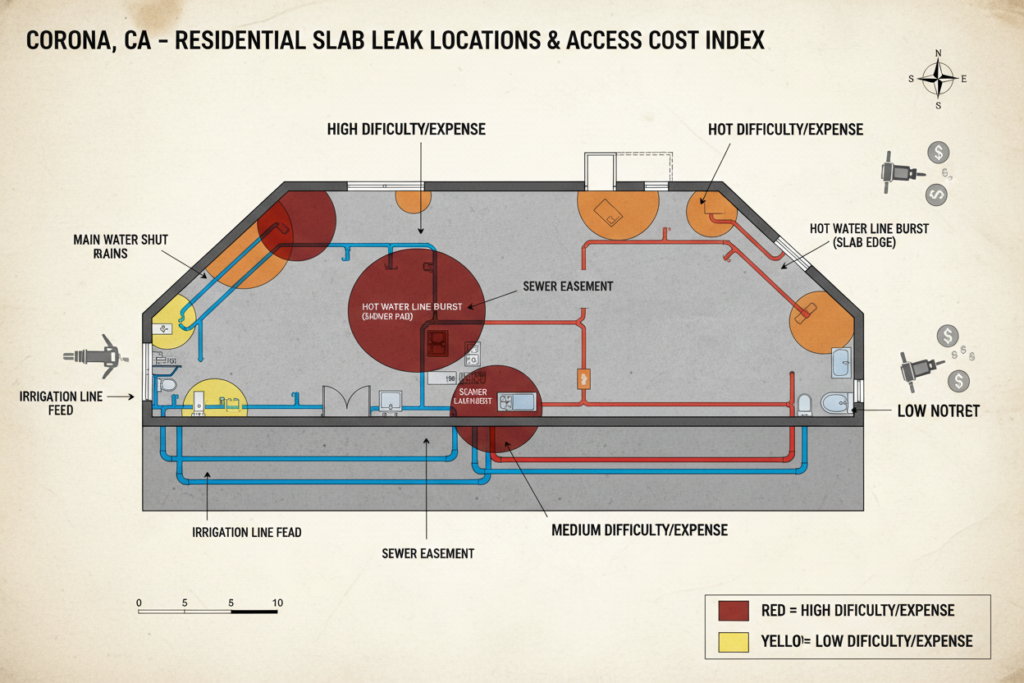
Location of the Leak
TL;DR: Edge leaks are cheaper; center-of-slab leaks cost more — expect $500–$1,500 for edge spot repairs and $2,000–$4,000+ for centrally located leaks that require more access work.
- Why it matters: The deeper and more central the leak, the more concrete cutting, labor, and excavation required — which raises the slab leak cost and total repair time.
- Quick tip: If the leak is near an exterior foundation edge or utility chase, ask the plumber about a targeted edge access to save on concrete cutting.
- Example: Edge slab leak under tile — detection $200 + spot repair $900 + tile repair $700 ≈ $1,800 total.
Detection Method Used
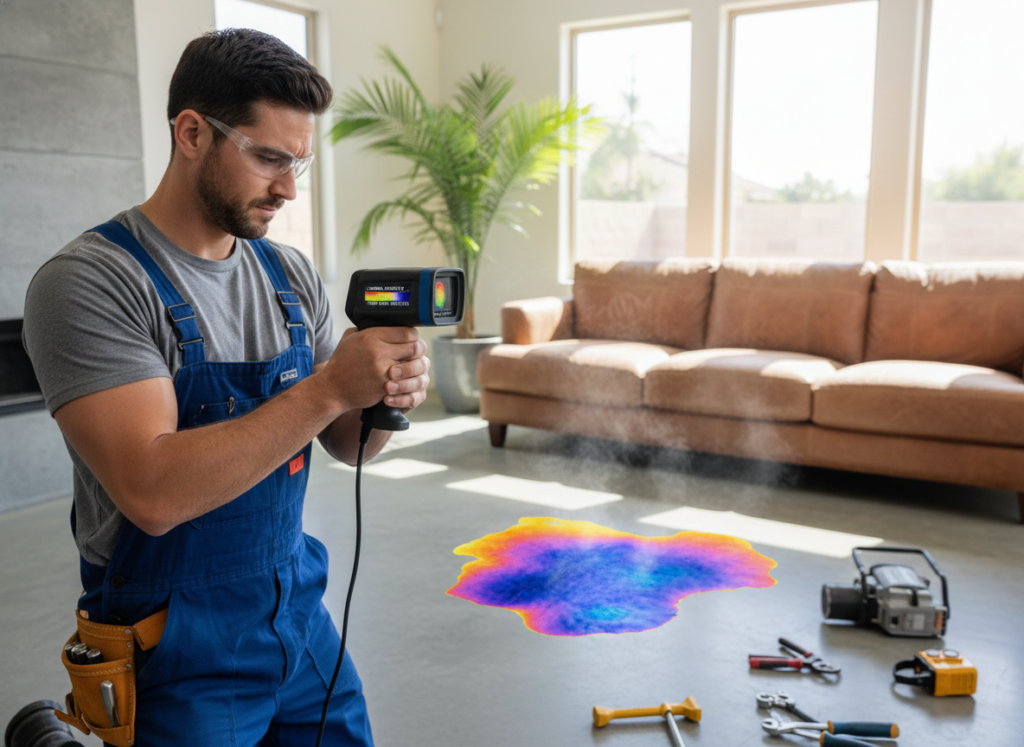
TL;DR: Detection typically costs $150–$500 depending on tools used; accurate detection often reduces overall repair and excavation costs.
- Common methods: electronic acoustic testing (cheaper first pass), thermal imaging for hot-water lines, pressure testing, and video inspection when accessible.
- Cost guide: basic acoustic detection $150–$250; combined thermal + acoustic + pressure testing $300–$500.
- Why spend on detection: Precise slab leak detection pinpoints the exact pipe and minimizes unnecessary concrete cutting, lowering the overall leak repair cost — accurate detection can often save $500–$1,500 in avoided excavation/restoration.
Repair Approach (Spot Repair vs Reroute)
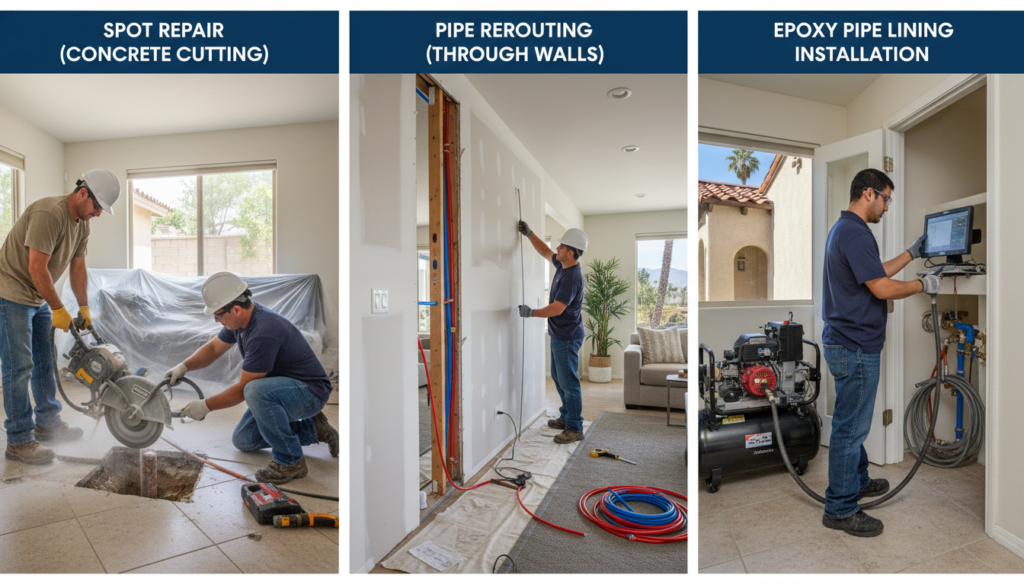
TL;DR: Spot repair: $500–$1,500; rerouting/partial repipe: $1,500–$4,000; complete repiping: $4,000–$10,000+.
- Spot repair: Fixes only the damaged section — lowest upfront slab leak repair cost, fastest turnaround, best for isolated leaks.
- Reroute / partial repipe: Installs new lines above slab level or around problem zones — higher initial cost but reduces future slab leaks and excavation.
- Complete repipe: Replaces the home’s supply piping (often with PEX or new copper) — highest initial cost but minimizes repeated repairs and long-term damage risk.
- Decision tip: Request a five-year cost comparison from your plumber (multiple spot repairs vs repipe total costs) to decide which is more economical over time.
Foundation Access Requirements
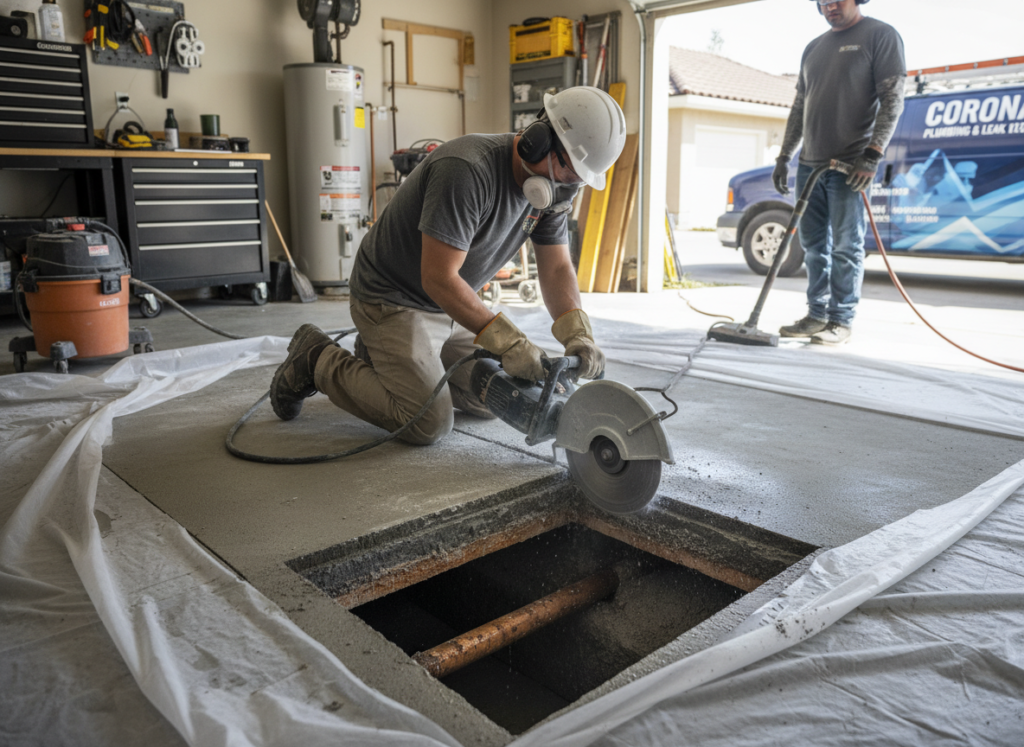
TL;DR: Concrete cutting and excavation add $500–$1,500; concrete patching $300–$800; flooring restoration (tile/hardwood) can add $1,000–$3,000+ depending on material and finish.
- What increases cost: thicker reinforced slab, deep pipe location, and the need for heavy equipment or crane access.
- Restoration: flooring, grout, hardwood refinishing, and drywall repair are often billed separately — get itemized restoration quotes before approving work.
- Tip to save: Ask if targeted trenchless rerouting or rerouting above slab is possible to avoid cutting expensive floor finishes.
Extent of Water Damage
TL;DR: Minor water damage remediation starts near $1,000; extensive mold, drywall replacement, or structural repair can exceed $5,000–$10,000.
- Secondary damage: If water reaches framing, subfloor, or wall cavities, costs and health risks rise quickly (mold remediation, structural fixes).
- Prevent vs ignore: Early slab leak detection and prompt repair limit secondary water damage and reduce total outlay — waiting typically multiplies the eventual repair and remediation costs.
- Example case: Central slab hot-water rupture — detection $350 + excavation & repair $2,800 + concrete patch $600 + drywall/floor restore $2,000 ≈ $5,750 total.
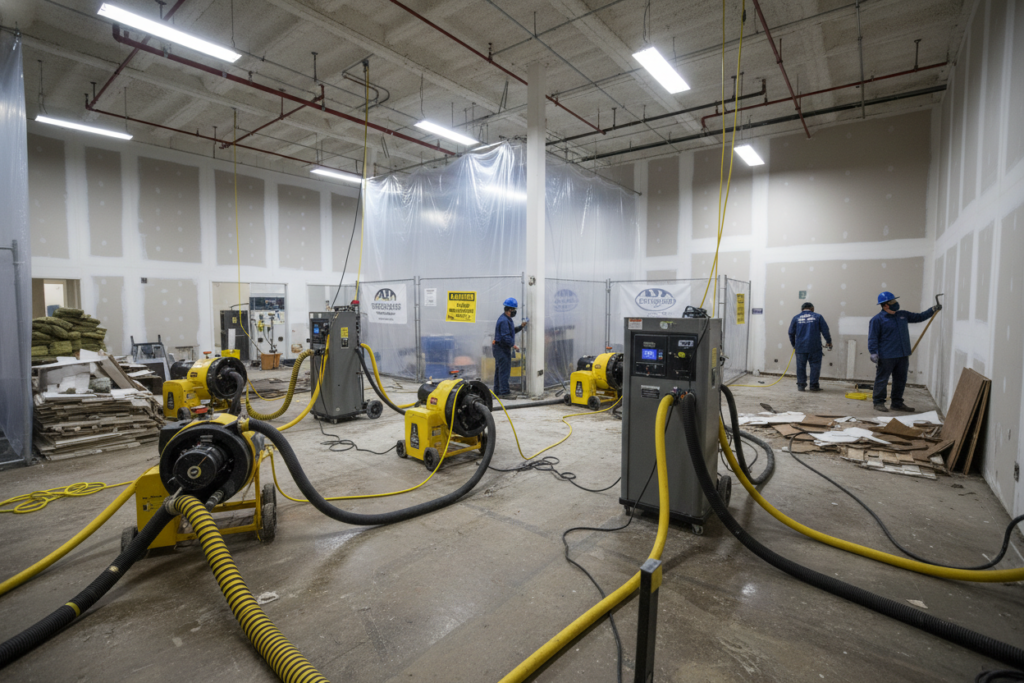
- Detection: $150–$500
- Spot slab leak repair: $500–$1,500
- Reroute/partial repipe: $1,500–$4,000
- Complete repipe: $4,000–$10,000+
- Concrete cutting + patching: $500–$2,300 (combined)
- Water damage remediation: $1,000–$10,000+
Expanded examples:
- Edge leak under hardwood: detection $200 + spot repair $900 + flooring restore $1,200 ≈ $2,300 total.
- What if you wait: the same edge leak left for months can cause subfloor rot and mold — adding $2,000–$6,000 in remediation and potentially reducing resale appeal (estimate varies by extent; get local appraisal data).
Get an Accurate Assessment of Your Slab Leak
Every slab leak situation is unique. Our Corona plumbing experts can provide precise slab leak repair cost estimates after targeted detection — often same-day diagnostics and a written estimate you can use for insurance or resale disclosures.
Slab Leak Detection vs Repair Cost
Detection is the diagnostic step that pinpoints the problem; repair is the corrective work that fixes it. Understanding the difference between slab leak detection and repair cost helps you invest wisely up front and avoid unnecessary excavation that drives up total repair and restoration expenses.
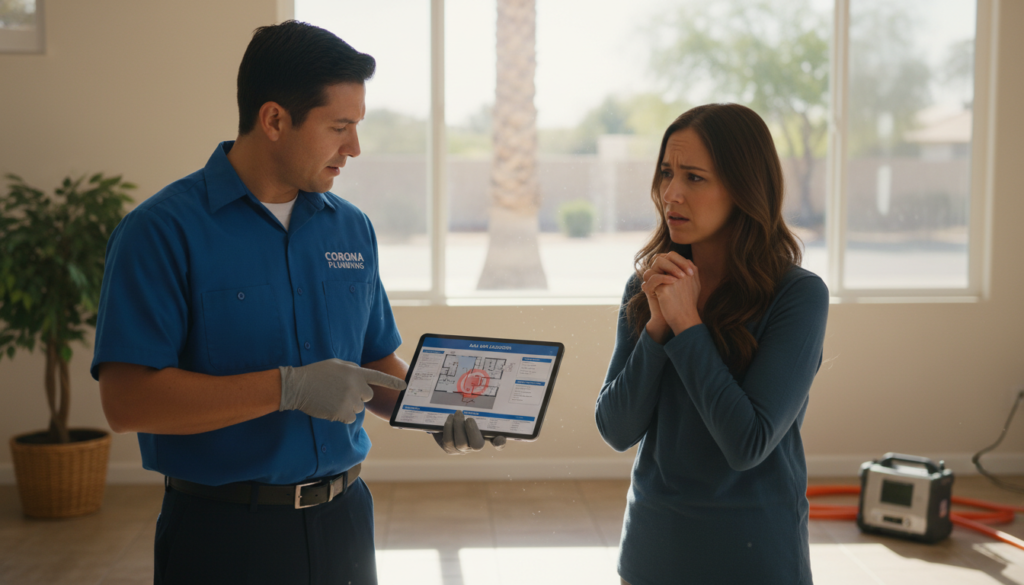
Detection Costs
Typical range: $150–$400 depending on property size and equipment used. More advanced combinations (thermal imaging + acoustic + pressure testing) generally fall in the $300–$500 range.
Standard water leak detection in Corona usually includes:
- Electronic acoustic leak detection — quick first pass to find active leaks ($150–$250)
- Thermal imaging to locate hot-water anomalies
- Pressure testing to confirm active loss and narrow the affected zone
- Video pipe inspection when there is access to the line
- Comprehensive diagnostic report with the suspected pipe location and recommended repair approach
Why it pays:
- Avoids unnecessary concrete cutting — targeted access reduces concrete/excavation costs.
- Shortens job time — less labor on site lowers labor-related slab leak repair cost.
- Improves repair accuracy — fewer return visits and lower total restoration costs (flooring, drywall, mold remediation).
What to ask during detection: “Will you mark the exact pipe location? Do you issue a written diagnostic report? Is the detection fee credited if we hire you for repair?”
Repair Costs
Typical range: $500–$4,000 for most slab leak repairs; complex jobs or full repiping can be higher.
Repair pricing commonly includes:
- Labor to access the leak (concrete cutting or shallow excavation)
- Pipe repair or replacement materials (copper, PEX, or reroute lines)
- Concrete restoration and patching
- Pressure testing after repair to confirm integrity
- Basic cleanup and disposal
Note: additional line items such as flooring restoration, drywall repair, mold remediation, and foundation repair are typically billed separately and can raise the final leak repair cost significantly.
Pro Tip: Many local plumbers will credit the detection fee toward the repair if you hire them for both phases — ask about detection credit when you schedule service. Accurate slab leak detection and a targeted repair can easily reduce total costs by avoiding broad excavation and extra restoration work.
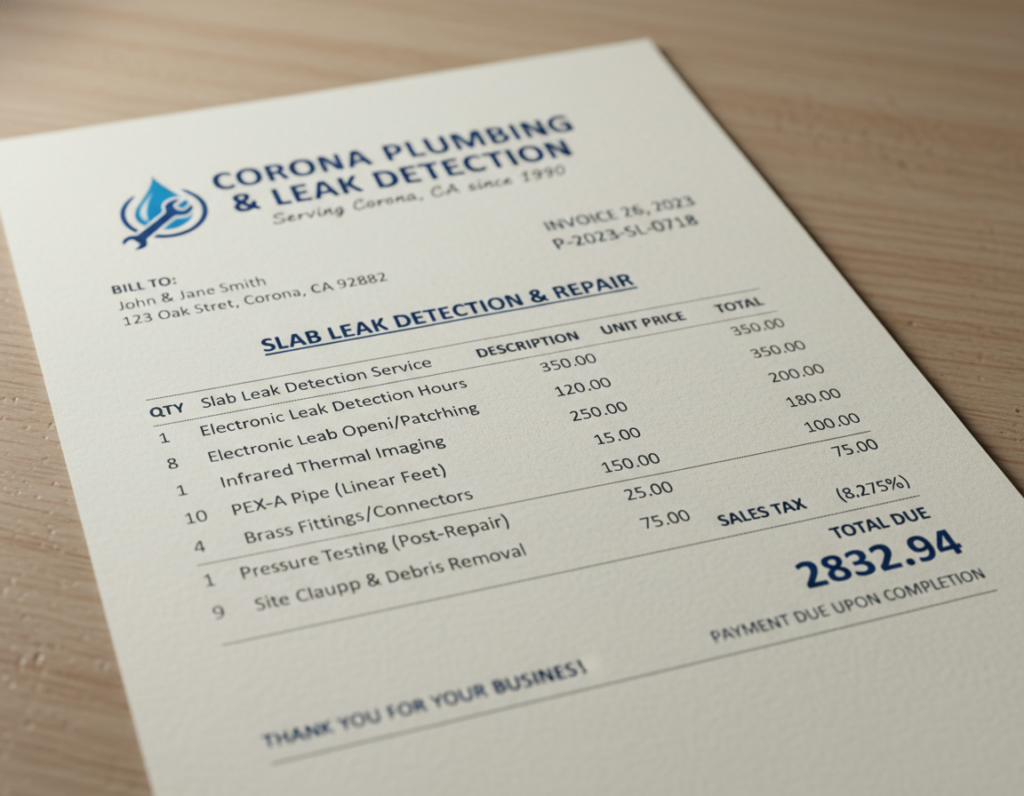
- Acoustic detection: $150–$250
- Thermal + acoustic + pressure: $300–$500
- Typical repair after detection: $500–$4,000
- Potential additional costs (restoration, mold, foundation): varies widely
Want to minimize overall leak repair cost? Book a targeted slab leak detection appointment — schedule detection or call 909-378-9322 to ask whether your detection fee can be credited toward repair. Download our sample diagnostic report before your appointment so you know what to expect and can submit organized documentation to your insurer.
When Repiping May Impact Overall Cost
For many Corona homeowners — especially those in older houses — a single slab leak can signal broader plumbing problems. Knowing when repiping (partial or complete) is the smarter long‑term investment helps you avoid repeated slab leak repair costs, unexpected emergency work, and escalating water damage that can affect your home’s value.

Signs Complete Repiping May Be Necessary
- Multiple previous leaks: More than two slab leaks in a year usually indicates systemic pipe failure rather than isolated damage — repeated slab leak repair costs can add up quickly.
- Aging copper or legacy piping: Homes built 1970–1990 frequently used copper or other materials that corrode in local soil conditions; consider full repipe when corrosion appears in multiple locations.
- Discolored or metallic-tasting water: Rusty water often signals widespread pipe corrosion that spot repairs won’t fix.
- Consistent low water pressure: Gradual pressure decline across fixtures can indicate deteriorating pipes throughout the system.
- Visible corrosion in accessible lines: If exposed piping shows pitting or leaks, hidden pipes are likely in similar condition — rerouting pipes may only be a temporary fix.
How to decide: quick flow
- Count leaks: 0–1 — try a targeted spot repair; 2–3 — get a system inspection; 3+ — get repiping quotes and a five-year cost comparison.
- Assess pipe condition: visible corrosion or discolored water → lean toward partial/complete repiping.
- Factor economics: if repeated repairs approach the cost of partial or complete repiping, repiping often wins long term.
Cost Comparison: Repeated Repairs vs. Repiping
| Solution | Initial Cost | Long-Term Cost (5 Years) | Best For |
| Spot Repairs | $500–$1,500 per repair | $2,500–$7,500 (assuming multiple repairs) | Newer homes with isolated leak issues |
| Partial Repiping / Rerouting | $2,000–$5,000 | $3,000–$7,000 (including occasional repairs) | Homes with section-specific failures |
| Complete Repiping | $4,000–$10,000 | $4,000–$10,000 (minimal additional repairs) | Older homes with deteriorating plumbing |
Repiping options and materials matter: modern PEX repiping is typically faster and less prone to corrosion than older copper in many soil conditions, while copper may be preferred in other situations. Ask your plumber about material options, warranties, and the impact on flooring and foundation access. Rerouting pipes above slab may increase initial cost but can eliminate future slab excavation and reduce long‑term leak repair cost.
“In our experience serving Corona homeowners, complete repiping often becomes more economical after the third slab leak repair, especially in homes built before 1990. The peace of mind and reduced future repairs typically outweigh the higher initial investment.”
Two short examples:
- 1965 bungalow: Four slab leaks in two years — repeated spot repairs cost ≈ $6,000 total; complete repipe estimate $7,200 — repipe eliminated recurring disruption and reduced five‑year costs.
- 1988 track home: Isolated single leak under bathroom — spot repair $900 plus tile restore $600 = $1,500; repiping would be unnecessary and cost-prohibitive.
Prevention vs Repiping — Compare & Contrast
Preventive measures can reduce the chance of slab leaks or delay the need for repiping. Compare options below:
- Pressure regulation: Installing a pressure regulator costs a few hundred dollars but reduces stress on pipes — low ongoing cost, moderate effectiveness.
- Water quality treatment: Filters or water softeners ($500–$3,000 installed) can reduce corrosive minerals in some areas — effective for corrosion-related leaks.
- Annual leak detection: Targeted slab leak detection ($150–$400/year) catches issues early — low cost, high value in older systems.
- Repiping: High upfront cost ($4k–$10k) but eliminates recurring slab leaks and lowers five-year repair costs — best for homes with systemic pipe failure.
How Repiping Affects Home Value
- New plumbing increases buyer confidence and can speed a sale — documented repipes are a selling point for older homes.
- Unresolved slab leaks or repair patches can reduce buyer offers or require price concessions; exact impact varies by market — consult a local appraiser for a tailored estimate.
- Providing documented detection reports and itemized repairs helps maintain resale value and supports insurance disclosures.
Working with a reputable repipe plumber near Corona ensures you receive an honest five-year cost comparison tailored to your home and avoids temporary fixes that lead to repeated expenses. Ask for a written projection showing cumulative repair costs vs repipe cost (we provide sample templates on request).
Considering Repiping? Get a Free Comparison
Request a no-obligation repipe consultation — we’ll assess pipe type, estimate material options (PEX vs copper), and provide a five-year cost projection and estimated impact on resale value to help you decide.
When a Slab Leak Becomes an Emergency
Not every slab leak requires immediate action, but certain warning signs mean you should call a plumber right away. Acting fast can prevent extensive water damage, costly foundation repair, and expensive mold remediation that multiply the total leak repair cost.
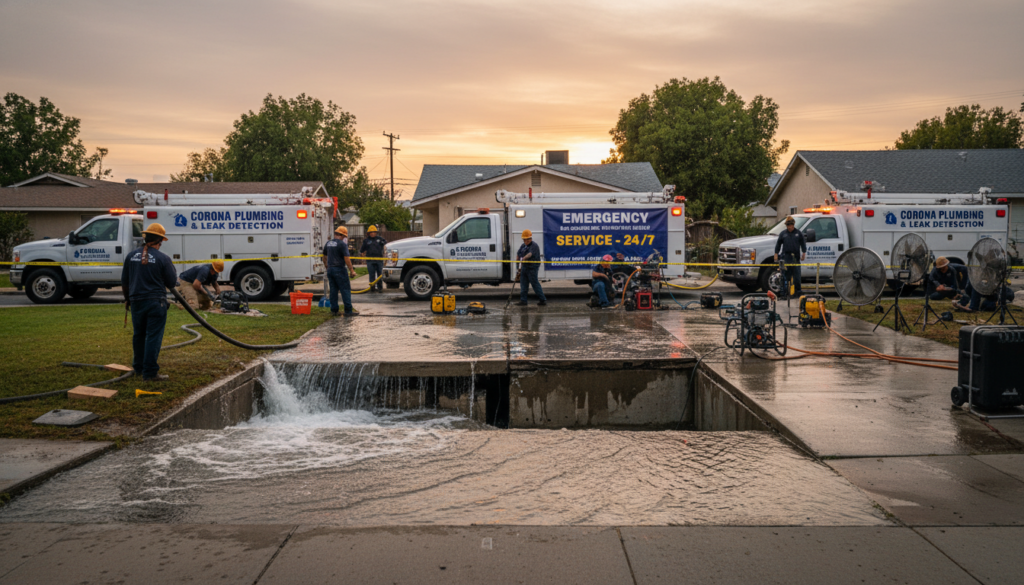
Warning Signs Requiring Immediate Action
- Standing water: Visible pooling on floors or around the foundation — clear evidence of active leakage.
- Floor heaving or cracking: Concrete lifting, bulging, or new floor cracks suggest pressure or erosion under the slab.
- Sudden foundation movement: New wall cracks, door/window misalignment, or sloping floors may indicate structural compromise.
- Large unexplained spike in your water bill: A sharp increase often signals significant ongoing water loss.
- Constant running water sound: Hearing water when no fixtures are on usually means an active leak under the slab.
- Hot spots on floors: Warm areas on the floor surface can point to a hot-water line rupture beneath the slab.
- Visible mold or persistent damp smells: Mold growth or musty odors near floors or lower walls indicate ongoing moisture and health risk.
- Noticeable drop in water pressure: Widespread low pressure across fixtures can be a sign of a major pipe failure.
Warning: Ignoring emergency slab leak signs can escalate damage rapidly. Secondary issues such as foundation erosion, structural repairs, and mold remediation can multiply repair costs — early intervention typically limits repair costs and reduces health risks.
What to do right now (quick checklist)
- Turn off the main water valve if you can do so safely.
- Record evidence: take wide and close-up photos, note meter readings with timestamps, and save recent high water bills for insurer records.
- Call a licensed emergency plumber for immediate diagnostics and temporary shutoff or containment (many Corona plumbers offer 24/7 service).
- Contact your insurer to report the loss and ask about emergency coverage and documentation they require.
What happens if you don’t fix it — typical escalation timeline
- Week 0–2: Higher water bills and localized wet spots; repair and detection costs remain relatively low (detection $150–$400; spot repairs $500–$1,500).
- Month 1–3: Water migrates to subfloor and wall cavities — mold and drywall damage can appear; remediation and drywall/floor repairs can add $1,000–$5,000+
- 6–12+ months: Possible foundation undermining, structural repairs, and extensive mold remediation — structural/foundation repair costs can escalate into the $10,000+ range depending on extent.
Example: A Corona homeowner shut off the main, documented the leak, and called a 24/7 crew. The crew performed detection and a temporary stop-gap repair the same day — immediate cost under $1,200 — avoiding progressive undermining that could have led to foundation work exceeding $12,000. (Costs are illustrative; verify with local contractors and insurers.)
Impact on Home Value
- Visible or repaired water damage and unresolved foundation issues can reduce buyer confidence and may lower offers; documented, professionally repaired leaks with invoices mitigate this risk.
- Complete repiping or documented structural fixes can be a positive selling point for older homes — ask your appraiser how documented repairs affect local comps.
If you notice any of the warning signs above, contact a professional offering emergency plumbing services right away. Learn more about when a slab leak is an emergency and how to respond safely.
Emergency Slab Leak? Don’t Wait
Our Corona emergency plumbing team is available 24/7 to stop leaks, limit water damage, and protect your foundation. Call 909-378-9322 now for immediate response. Download the printable “If You Have a Slab Leak” checklist before the crew arrives to speed documentation for your insurer.
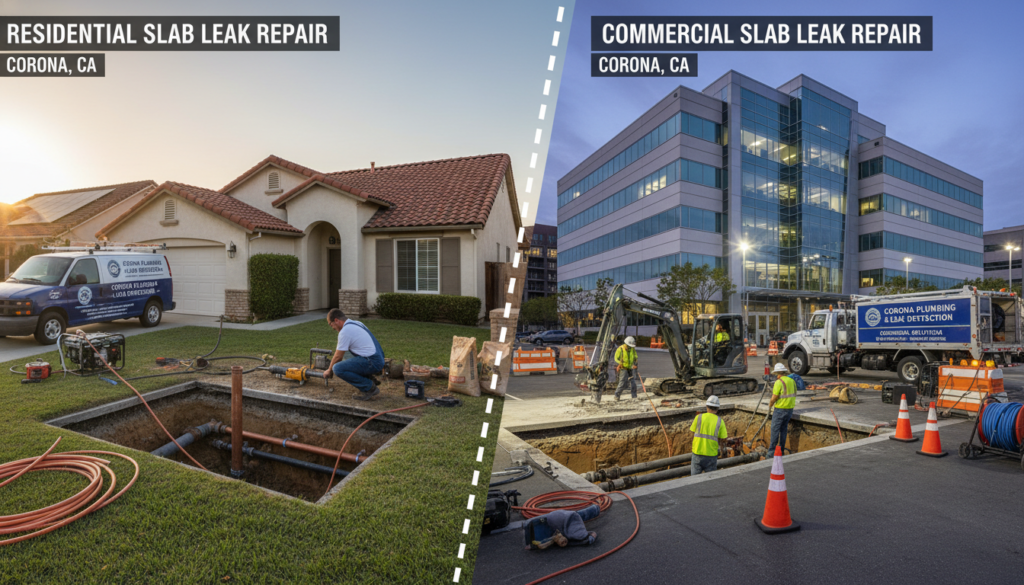
Residential vs Commercial Slab Leak Costs in Corona
The scale, complexity, and urgency of slab leak work vary widely between homes and businesses. Understanding the key differences between residential slab leak costs and commercial slab leak costs helps homeowners and property managers set realistic budgets and choose the right repair strategy for their building.
Residential Slab Leak Costs
Typical costs for Corona homes (quick reference):
- Detection: $150–$400
- Spot repairs: $500–$1,500
- Pipe rerouting / partial repipe: $1,500–$4,000
- Complete repiping: $4,000–$10,000
- Water damage restoration: $1,000–$5,000
- Timeline: Usually 1–3 days for most residential jobs
Residential jobs typically use smaller pipe sizes (½”–1″), simpler plumbing layouts, and more predictable access — which generally keeps slab leak repair cost and job time lower than comparable commercial work. For most homeowners, a focused leak detection and targeted spot repair will limit both leak repair cost and secondary water damage.
Commercial Slab Leak Costs
Commercial properties often face higher costs and more complex logistics:
- Detection: $400–$1,000 (larger spaces require more equipment/time)
- Repairs: $2,000–$15,000+ depending on system complexity
- Water damage & inventory loss: $5,000–$50,000+ in severe cases
- Timeline: Often 3–7 days or longer, factoring in permits and shutdown coordination
- Business disruption: Downtime, compliance, and phasing can add significant indirect costs
Commercial systems use larger-diameter pipes (1″–4″+), multiple zones, and stricter code requirements — all of which increase both material and labor costs. Coordinating around business operations often raises complexity and downtime-related expense.
Top 3 Cost Differences — Quick Scan
- Pipe size and materials: Commercial pipes are larger and cost more to replace.
- System complexity: Multiple zones, pumps, and feeders require additional labor and coordination.
- Access and disruption: Commercial work may require nights/weekends or phased shutdowns, increasing total project costs.
Sample Scenarios
- Small retail store: Detection $600 + targeted repair $2,500 + business interruption = $4,000–$8,000 total depending on downtime.
- Warehouse: Larger pipe replacements and extended access needs can push repairs into the $10,000–$20,000 range.
- Single-family home: Typical spot repair with minor flooring restore: $1,000–$2,500 total.
| Factor | Residential Impact | Commercial Impact |
| Pipe Size | Smaller (½”–1″) — lower material cost | Larger (1″–4″+) — higher replacement cost |
| System Complexity | Simpler layouts | Multiple zones, pumps, and branches |
| Access Challenges | Usually straightforward | May need night/weekend work to avoid disruption |
| Regulatory Requirements | Standard residential code | Stricter codes and ADA considerations |
| Insurance & Costs | Homeowner policies common | Complex commercial policies; possible business interruption claims |
How slab leaks affect your home
Beyond immediate repair costs, slab leaks can impact structural integrity, indoor air quality, and long-term maintenance budgets:
- Structural risk: Ongoing leaks can erode soil and undermine foundations, increasing foundation repair costs and lowering buyer confidence.
- Indoor air quality: Persistent moisture encourages mold, which has health implications and remediation expenses.
- Resale impact: Documented, professionally repaired leaks protect value; unresolved or poorly repaired leaks can reduce offers or require price concessions — consult a local appraiser for specific estimates.
If you manage a business property, request a dedicated commercial quote that includes downtime mitigation and code compliance costs. For homeowners, targeted detection and a focused spot repair usually keep slab leak repair costs low and turnaround fast.
Need a Residential or Commercial Quote?
We provide tailored estimates for both homeowners and business owners in Corona — request a commercial quote or call 909-378-9322 to discuss your building’s needs.
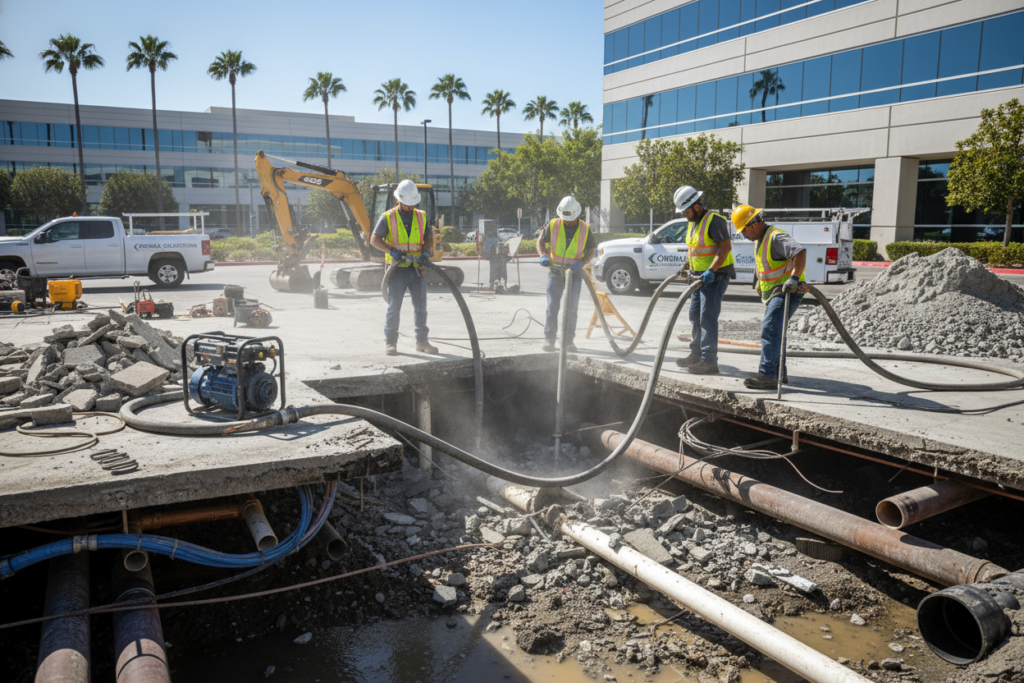
Service Areas We Cover
Local Plumbers 4 U provides comprehensive slab leak detection and repair services throughout Corona and the surrounding Inland Empire. Our technicians know local soil conditions, common pipe types, and fast response patterns needed to limit water damage and foundation issues—helping homeowners minimize leak repair cost and secondary damage.
Corona
Our home base — rapid local response for slab leak detection and repair across Corona neighborhoods (South Corona, Corona Hills, Eagle Glen). Typical response: same-day detection and on-site estimates; repairs often completed within 24–72 hours depending on scope.
Inland Empire
Full-service slab leak and water damage solutions across the Inland Empire, including Riverside, San Bernardino, Moreno Valley, Fontana, Rancho Cucamonga, and Ontario. We offer scheduled and emergency jobs with transparent travel/time estimates.
Riverside County
Serving Riverside County communities — Temecula, Murrieta, Menifee, Lake Elsinore, Perris — with experienced technicians for residential and commercial slab leak repair and foundation-related plumbing issues.
San Bernardino County
Expert slab leak detection and repair in San Bernardino County including Redlands, Chino, Chino Hills, Upland, and Yucaipa. We coordinate access and work times to minimize disruption for homeowners and businesses.
Neighboring Communities
We also cover adjacent communities like Norco, Eastvale, Mira Loma, and Jurupa Valley. If you’re unsure whether we service your address, call or use our contact form for a quick check and estimated arrival time.
Commercial Districts
Specialized commercial slab leak services for retail, office, and industrial districts across the region — we provide commercial quotes that include downtime mitigation, code compliance, and phased scheduling to keep businesses open when possible.
How we serve you:
- Typical turnaround: same-day detection appointments available; repairs scheduled within 24–72 hours depending on severity and permits.
- Response times and travel fees: we aim for rapid local response from our Corona hub; any travel or after-hours fees are disclosed upfront.
- Service guarantees: written estimates, diagnostic reports, and a clear scope for concrete/flooring restoration when needed.
How response time affects cost
Faster response typically reduces total slab leak cost — same-day detection can limit excavation and secondary water damage, while delays often increase restoration and foundation repair costs. Ask for a quick estimate of cost differences for same-day vs delayed service when you call.
Note on local soil & foundation risk: Corona and the Inland Empire have varied soil types (clay, alluvial deposits) that affect corrosion and foundation stability — we account for local conditions when estimating repair and foundation work.
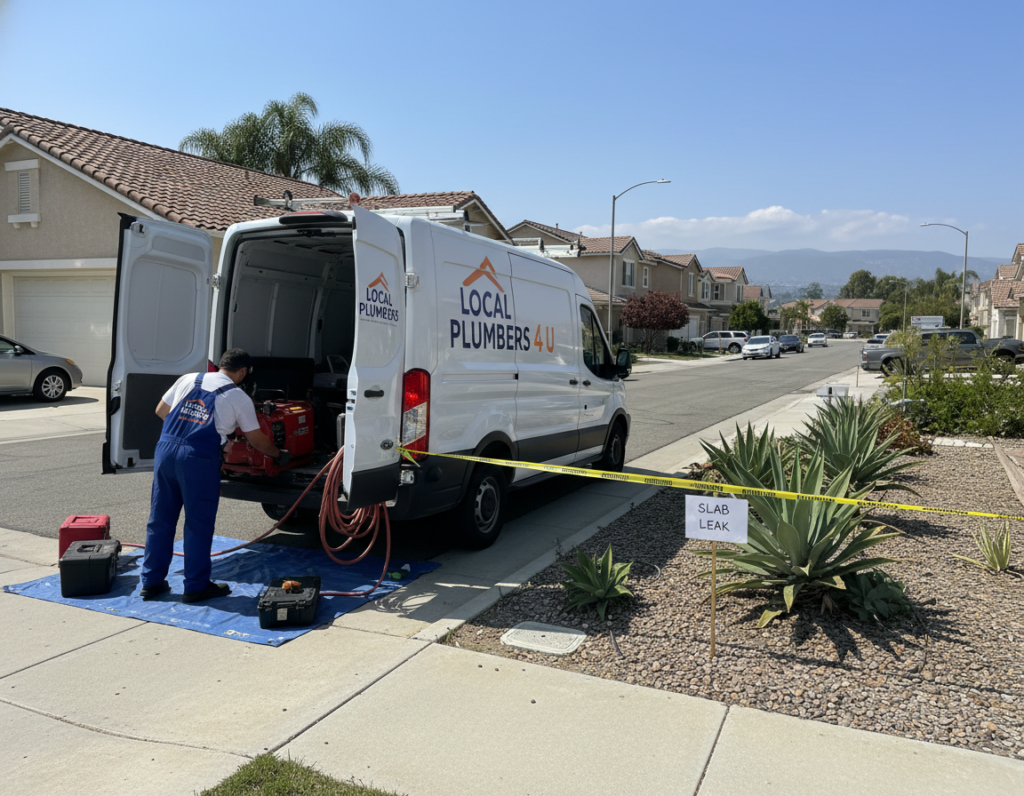
Trust Local Experts for Your Slab Leak Repair
Understanding the average cost to fix a slab leak in Corona, CA is a helpful starting point, but the final leak repair cost depends on your situation — leak location, pipe type, detection method, repair approach, and any water damage. Work with experienced local plumbing professionals to get an accurate assessment that balances immediate repairs with long‑term value and protects your home from escalating foundation repair costs.
Get Expert Slab Leak Repair in Corona
We offer clear pricing, fast slab leak detection, and dependable repairs. Book a free inspection today — detection appointments are often available same‑day, and many clients receive detection fees credited toward approved repairs.
Next steps: 1) Schedule targeted slab leak detection, 2) receive a written estimate with repair options and leak repair cost breakdown, 3) approve repairs and schedule work, 4) coordinate flooring/foundation restoration if needed. We’ll provide itemized invoices and diagnostic reports you can share with your insurer or a buyer’s agent.
How slab leaks affect home value
- Unrepaired leaks: Visible water damage, mold, or foundation issues can reduce buyer confidence and lead to lower offers or required concessions at sale time.
- Documented repairs: Completed, documented slab leak repair and a diagnostic report can protect resale value and speed the sale — sellers should consider a pre‑listing plumbing inspection.
- Major fixes: Complete repiping or structural foundation repairs typically restore buyer confidence but keep receipts and warranties to show to prospective buyers or appraisers.
Professional Standards & Insurance: Our slab leak repair services follow industry best practices and state plumbing codes. We are licensed and insured — ask us for license details, warranties, and the itemized paperwork you need for insurance claims or MLS disclosures.
Bonus: Request our free “At‑a‑Glance” infographic — a printable one-page summary of typical slab leak costs, warning signs, prevention tips, and a checklist you can use during insurance claims or when preparing your home for sale.