
Understanding what causes slab leaks in Southern California helps homeowners recognize risk factors before foundation damage occurs. Local soil conditions, water chemistry, pipe materials, and pressure levels all contribute to hidden leaks beneath concrete slabs. In the Inland Empire region, these issues are particularly common due to our unique environmental factors and construction practices.
A slab leak occurs when water pipes beneath your home’s concrete foundation develop cracks or breaks, allowing water to escape. Because Southern California homes are predominantly built on concrete slabs rather than basements or crawl spaces, these leaks can go undetected for months while causing significant structural damage.
At Local Plumbers 4 U, we’ve helped thousands of homeowners across Riverside County, San Bernardino County, and Corona address these challenging plumbing emergencies. This guide explains the regional factors that make our area particularly susceptible to slab leaks.
Why are slab leaks common in California?
Slab leaks are common in California due to several regional factors: seismic activity that shifts foundations, expansive clay soils that put pressure on pipes, hard water that accelerates copper pipe corrosion, and high water pressure systems common in many municipalities. Additionally, many Southern California homes built during housing booms used copper piping that’s now reaching the end of its lifespan.
Does hard water cause slab leaks?
Yes, hard water is a significant contributor to slab leaks in Southern California. Our water contains high levels of minerals like calcium and magnesium that cause scale buildup inside pipes. This mineral accumulation gradually reduces water flow, increases pressure, and accelerates corrosion, especially in copper pipes. Over time, this hard water pipe damage creates pinhole leaks that can develop into major slab leaks.
Can high water pressure cause slab leaks?
Absolutely. High water pressure is one of the leading causes of slab leaks in Southern California homes. Municipal water systems often maintain pressure between 60-80 PSI, but residential plumbing is designed for 40-60 PSI. This excessive pressure stresses pipe joints and can create pinhole leaks, especially in older copper pipes. Pressure-reducing valves are essential in many Inland Empire communities to prevent these issues.
How does soil movement affect slab foundations?
Soil movement is a major contributor to slab leaks in Southern California. Our region’s clay-rich soils expand when wet and contract when dry, creating a constant shifting beneath foundations. This soil movement slab foundation interaction puts stress on rigid pipes, eventually causing them to crack or break at joints. Areas with significant elevation changes, like parts of the Inland Empire, are particularly susceptible.
What are the signs of a slab leak?
Common signs of a slab leak include: unexplained increases in water bills, the sound of running water when no fixtures are in use, warm spots on your floor (for hot water line leaks), damp or discolored flooring, mold or mildew growth (especially along baseboards), foundation cracks, and decreased water pressure. If you notice multiple symptoms, contact a professional immediately for leak detection.
Geological Factors Contributing to Slab Leaks
Southern California’s fault lines create ground movement that stresses plumbing beneath concrete slabs
Seismic Activity and Earthquakes
Southern California sits along several active fault lines, making it one of the most seismically active regions in the United States. Even minor earthquakes and tremors that residents barely notice can cause subtle ground shifting beneath homes. This constant movement puts stress on rigid plumbing pipes, eventually leading to cracks and leaks where pipes meet the concrete slab.
In the Inland Empire specifically, the San Jacinto and San Andreas fault systems create zones of increased risk. Homes built near these fault lines experience more frequent ground movement, making them particularly susceptible to slab leaks over time.
Expansive Clay Soils
Much of Southern California, particularly in Riverside and San Bernardino counties, has soil with high clay content. These expansive soils swell when wet and shrink when dry, creating a constant cycle of movement beneath your home’s foundation. During rainy seasons, the expanding soil pushes upward against your slab; during droughts, it contracts and creates voids.
This cyclical soil movement slab foundation interaction places enormous stress on water pipes, especially at points where pipes enter the concrete slab. Over time, even small movements can cause pipes to crack, creating leaks that further exacerbate the problem by saturating the soil.
Concerned About Geological Risks?
Our specialized equipment can detect slab leaks before they cause major foundation damage. We understand Southern California’s unique geological challenges.
Water Quality Issues in Southern California
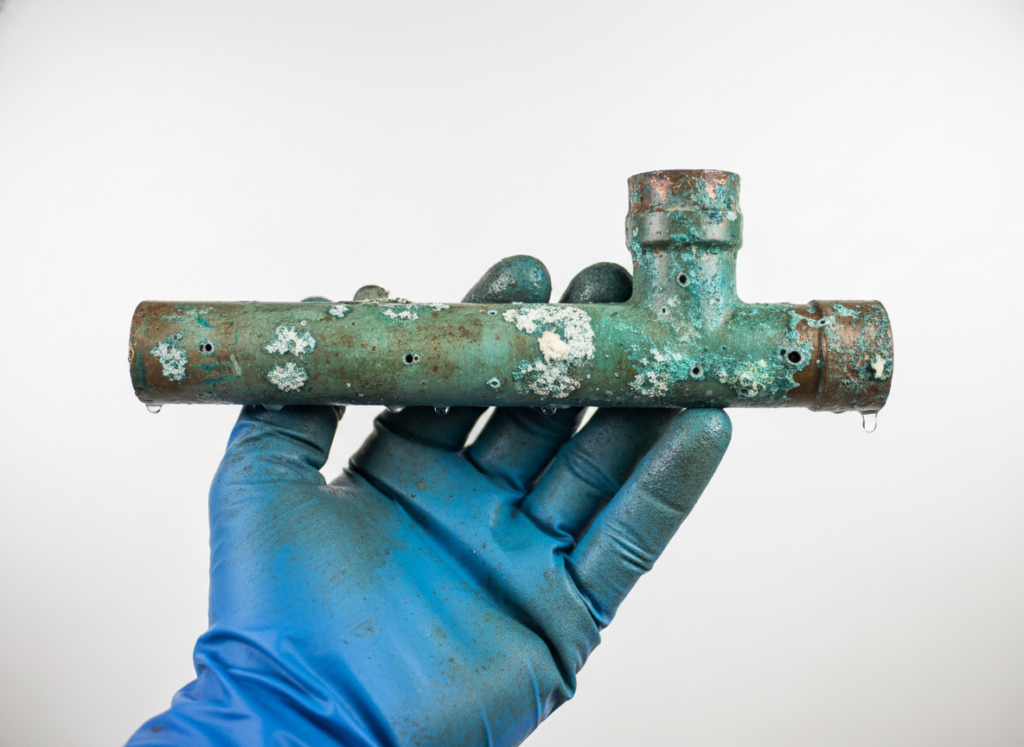
Copper pipe corrosion from Southern California’s mineral-rich water
Hard Water and Mineral Content
Southern California’s water supply contains high levels of dissolved minerals, particularly calcium and magnesium. This “hard water” creates several problems for your plumbing system. Inside pipes, these minerals form scale deposits that gradually narrow the water passage, increasing pressure and flow velocity. The abrasive nature of these mineral particles also accelerates wear on pipe walls.
Hard water pipe damage is especially problematic in copper plumbing, which is common in homes built between the 1960s and early 2000s throughout the Inland Empire. The minerals in our water react with copper to create corrosion, eventually leading to pinhole leaks that can develop into major slab leaks if left undetected.
Chemical Reactions and Corrosion
Beyond mineral content, Southern California’s water contains other elements that can accelerate copper pipe corrosion. California water treatment facilities often use chloramines (a combination of chlorine and ammonia) as disinfectants. While safe for drinking, these chemicals can be aggressive toward copper pipes, especially when combined with our naturally high pH levels.
This chemical cocktail creates ideal conditions for a type of corrosion called “pitting,” where small holes develop in copper pipes. In the Inland Empire region, where water sources and treatment methods vary by municipality, some areas experience more severe corrosion issues than others.
Plumbing Infrastructure and Materials
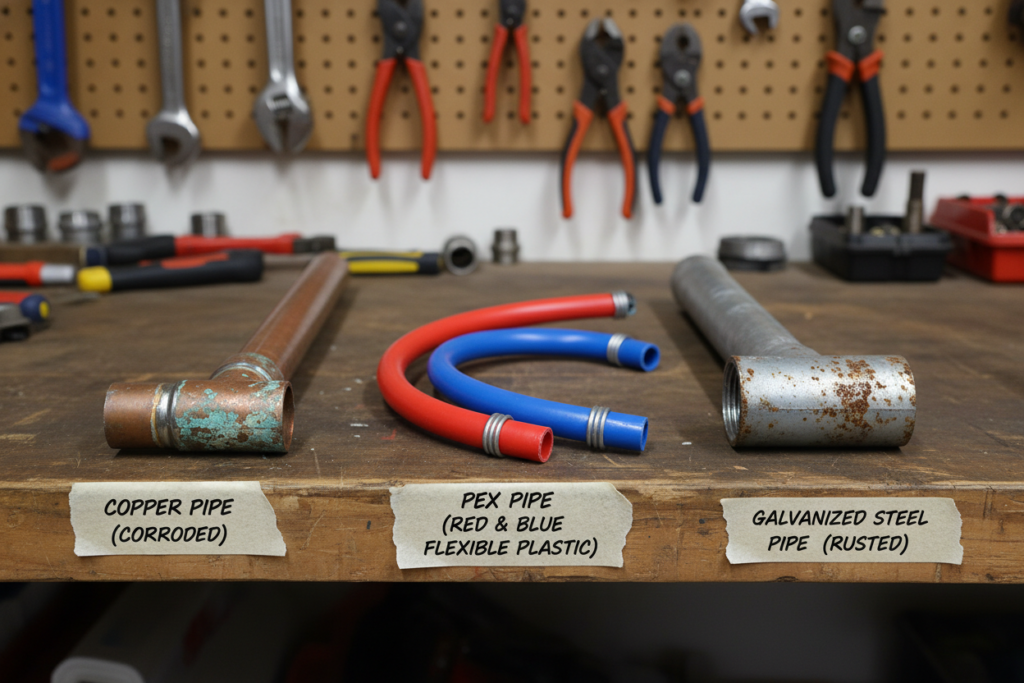
Different pipe materials have varying vulnerabilities to Southern California conditions
Aging Copper Pipes
Many homes in Southern California, particularly those built during housing booms in the 1970s through 1990s, used copper plumbing. While copper was considered a premium material at the time, we now know it has a typical lifespan of 20-50 years depending on water conditions. Throughout Riverside and San Bernardino counties, these copper systems are now reaching the end of their expected lifespan.
As copper pipes age, they become increasingly susceptible to corrosion, especially in our region’s hard water conditions. The combination of age, mineral content, and ground movement creates perfect conditions for slab leaks in homes with copper plumbing systems.
Poor Installation Practices
During Southern California’s construction booms, some builders cut corners to meet demand. Common installation issues include:
- Pipes laid directly on concrete without protective sleeves
- Improper soldering of copper joints
- Inadequate support for pipes, allowing excessive movement
- Pipes routed through or near concrete with insufficient space for expansion
- Use of incompatible metals creating galvanic corrosion
These installation deficiencies may not cause immediate problems, but over decades, they create weak points in your plumbing system. In the Inland Empire region, where construction quality varied widely during development periods, some neighborhoods experience higher rates of slab leaks than others.
Water Pressure and System Stress
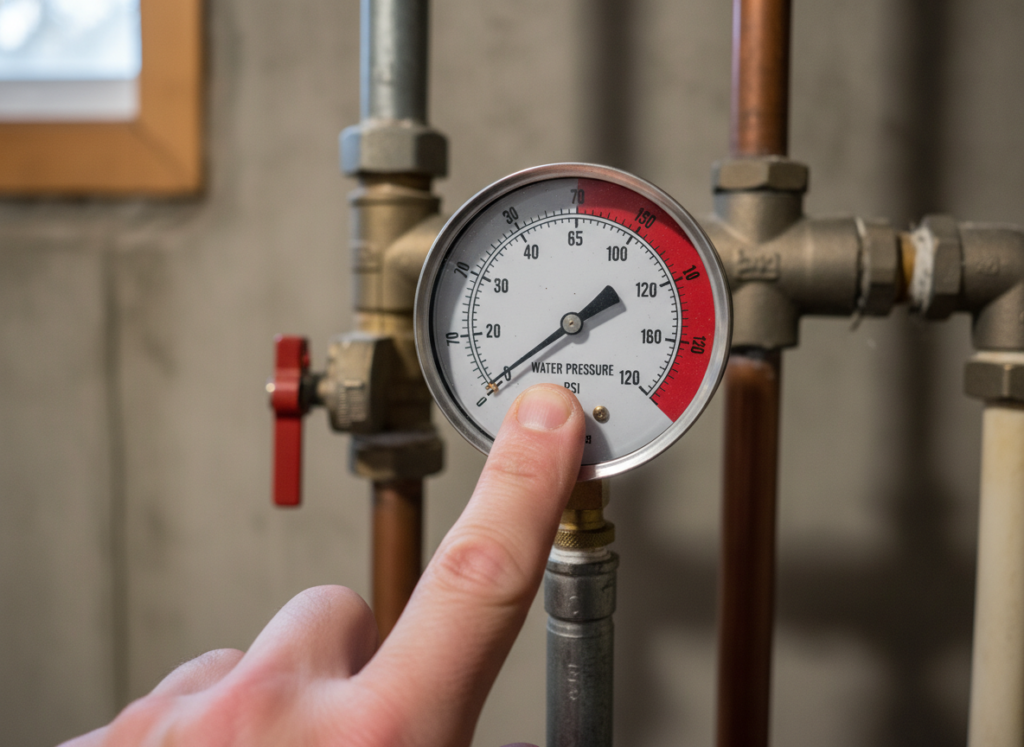
Water pressure exceeding 70 PSI significantly increases slab leak risk
Municipal Water Systems and Pressure
Southern California’s varied topography requires municipal water systems to maintain high pressure to deliver water to homes at different elevations. In many Inland Empire communities, especially those in hilly areas, water pressure regularly exceeds 80 PSI (pounds per square inch) – well above the 40-60 PSI recommended for residential plumbing.
This high water pressure slab leaks connection is often overlooked by homeowners. Excessive pressure forces water through pipes at higher velocities, accelerating wear on pipe walls and stressing connections. Over time, this constant stress can cause pipes to fail, especially at joints or where they pass through concrete.
Pressure Regulation Issues
Many Southern California homes lack properly functioning pressure regulating valves (PRVs), which are designed to reduce municipal water pressure to safe levels for residential plumbing. In older homes throughout Riverside and San Bernardino counties, these valves may be:
- Missing entirely (never installed)
- Improperly adjusted (set too high)
- Failed due to age or mineral buildup
- Undersized for the home’s water system
Without proper pressure regulation, your plumbing system experiences unnecessary stress with every water use. This is particularly problematic in the Inland Empire region, where municipal pressure often exceeds safe levels for residential plumbing systems.
Environmental Factors Unique to Southern California
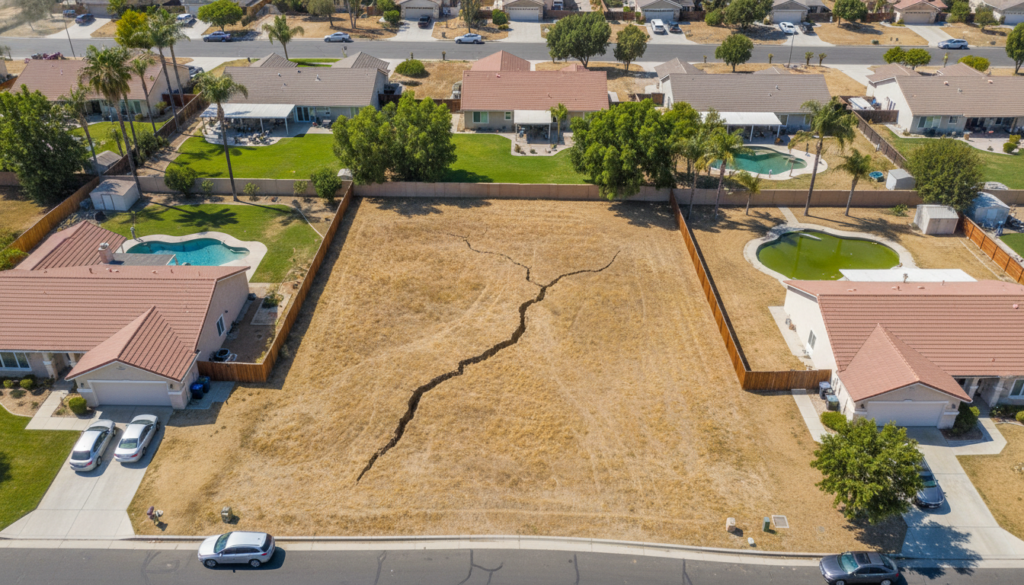
Drought cycles create soil shrinkage that stresses foundations and plumbing
Drought Cycles and Soil Conditions
Southern California’s climate is characterized by extended drought periods interrupted by occasional heavy rainfall. This cycle creates dramatic changes in soil moisture content, causing soil to shrink during dry periods and expand when wet. For homes in the Inland Empire, these cycles are particularly pronounced due to the region’s inland location and higher temperature extremes.
As soil repeatedly contracts and expands, it creates movement beneath your home’s foundation. This movement is often uneven, causing parts of the slab to shift slightly relative to others. The rigid pipes running beneath your slab cannot flex with this movement, eventually leading to stress fractures and leaks.
Temperature Fluctuations
While Southern California is known for its mild climate, the region does experience significant temperature variations, especially in inland areas like Riverside and San Bernardino counties. These temperature changes cause pipes to expand and contract, particularly hot water lines that regularly cycle between ambient temperature and 120+ degrees.
Over time, this thermal cycling weakens pipes, especially at joints and where they contact concrete. Hot water lines are particularly vulnerable to slab leaks for this reason, and many homeowners first notice a problem when they feel warm spots on their floor – a classic sign of a hot water line leak beneath the slab.
Experiencing Signs of a Slab Leak?
Don’t wait until foundation damage occurs. Our non-invasive detection methods can pinpoint leaks without destroying your floors.
Preventing and Addressing Slab Leaks

Modern electronic leak detection can find slab leaks without damaging floors
Proactive Maintenance Strategies
For Southern California homeowners, especially in the Inland Empire region, these preventive measures can significantly reduce slab leak risk:
- Install and maintain a water pressure regulator (set to 50-60 PSI)
- Consider a water softener system to reduce mineral buildup
- Schedule regular plumbing inspections, especially for homes over 20 years old
- Monitor water bills for unexpected increases that might indicate hidden leaks
- Maintain consistent soil moisture around foundations during drought periods
- Address even minor leaks promptly before they cause structural damage
Modern Repair Options
When slab leaks do occur, today’s technology offers several repair options that are less invasive than traditional methods:
Pipe Rerouting
Bypassing damaged sections by running new pipes through walls or ceilings, avoiding the need to break concrete.
Epoxy Pipe Lining
Creating a new pipe within the existing pipe using epoxy resin, sealing leaks without replacement.
Pipe Bursting
Pulling new pipe through old pipe location, breaking old pipe outward without extensive excavation.
These modern techniques allow for slab leak repair with minimal disruption to your home. At Local Plumbers 4 U, we specialize in these non-invasive methods, helping Inland Empire homeowners resolve slab leaks without destroying floors or foundations.
Why Local Expertise Matters for Slab Leak Detection
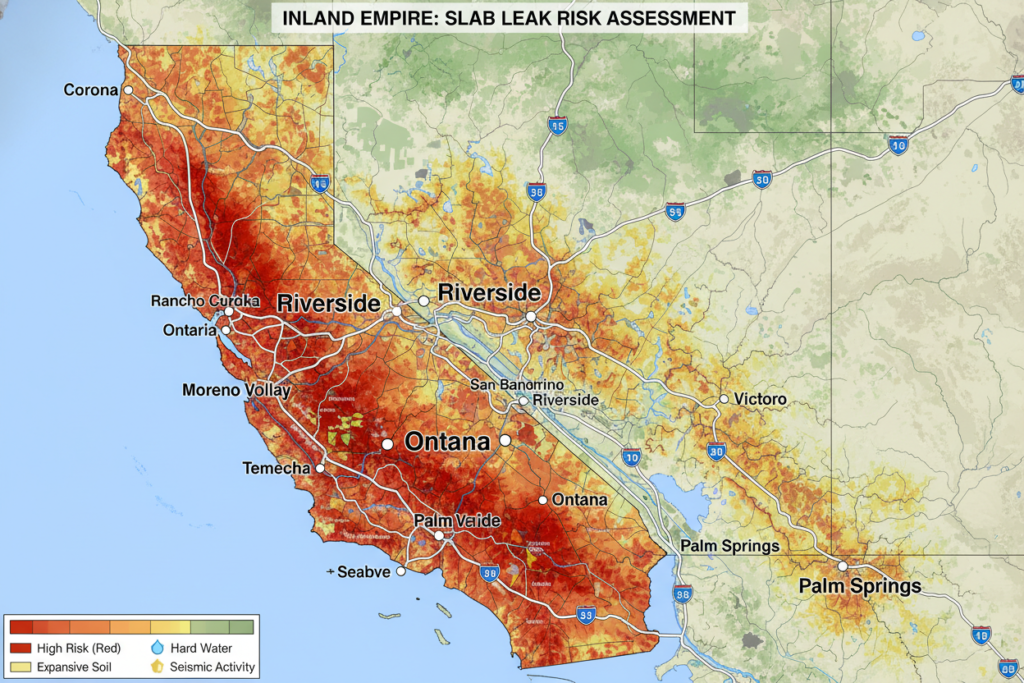
Slab leak risk varies throughout the Inland Empire based on local conditions
When dealing with slab leaks in Southern California, understanding local conditions is crucial. The Inland Empire region has specific challenges that differ from coastal or mountain communities:
- Higher temperature fluctuations than coastal areas, increasing pipe expansion/contraction
- More extreme drought cycles, causing greater soil movement
- Varying water sources and mineral content between municipalities
- Different construction standards based on when developments were built
- Proximity to specific fault lines that influence ground movement patterns
At Local Plumbers 4 U, our technicians have specialized knowledge of Riverside County, San Bernardino County, and Corona’s unique conditions. This local expertise allows us to accurately diagnose slab leak causes and recommend the most effective, long-lasting solutions for your specific situation.
Protect Your Home From Slab Leak Damage
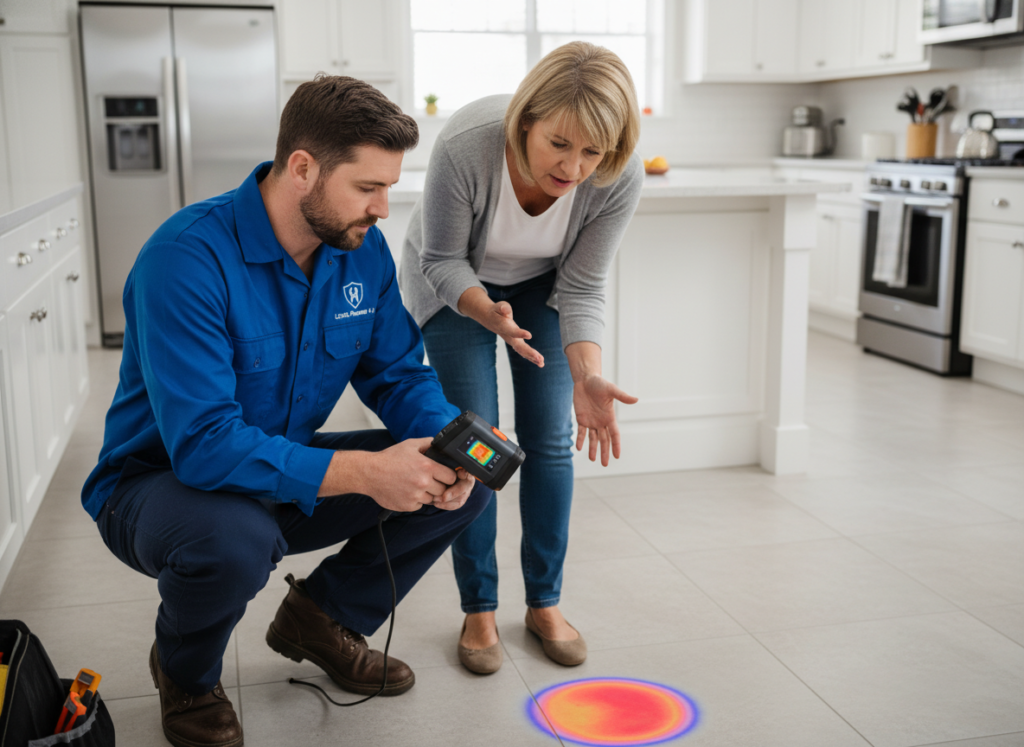
Our certified technicians provide thorough inspections and clear explanations
Understanding what causes slab leaks in Southern California is the first step toward protecting your home. At Local Plumbers 4 U, we specialize in early detection and minimally invasive repairs for homeowners throughout the Inland Empire region.
Schedule Your Free Slab Leak Inspection
Our experienced technicians will check your home for signs of slab leaks and provide honest recommendations – with no obligation.
Protecting Your Southern California Home
Slab leaks in Southern California homes result from a unique combination of regional factors: seismic activity, expansive soils, hard water, aging infrastructure, and climate conditions. For homeowners in the Inland Empire, understanding these risk factors is essential for protecting your property and avoiding costly repairs.
At Local Plumbers 4 U, we’ve helped thousands of homeowners throughout Riverside County, San Bernardino County, and Corona address slab leaks with our specialized detection equipment and minimally invasive repair techniques. Our local expertise allows us to identify problems quickly and recommend the most effective, long-lasting solutions.
Don’t wait until a small leak becomes a major foundation issue. Contact Local Plumbers 4 U today for a free inspection and expert advice on protecting your home from the unique challenges of Southern California’s plumbing environment.
Available 24/7 for Emergency Slab Leak Detection