
How plumbers detect slab leaks involves specialized equipment and diagnostic methods designed to locate hidden pipe leaks beneath concrete foundations without unnecessary damage. Accurate detection helps prevent structural issues and reduces repair costs.
Slab leaks present a unique challenge for homeowners in Southern California, where concrete slab foundations are the standard construction method. These leaks occur when pipes embedded within or beneath your home’s concrete foundation develop cracks or breaks. Because the affected pipes are hidden under several inches of concrete, detecting the exact location requires professional expertise and specialized tools.
Professional detection matters because accurate diagnosis prevents unnecessary demolition of your floor while ensuring the true source of the leak is identified. Without proper detection, you risk costly repairs that miss the actual problem, leading to ongoing water damage and potential structural issues for your property. For comprehensive solutions to detect and address any water leaks in your home, visit our water leak detection page.
How do plumbers find leaks under concrete?
Professional plumbers use specialized equipment including acoustic listening devices, electronic leak detectors, thermal imaging cameras, and pressure testing to locate leaks under concrete slabs without extensive demolition. These non-invasive methods allow them to pinpoint the exact location before any concrete needs to be disturbed.
Is slab leak detection invasive?
Modern slab leak detection is primarily non-invasive during the diagnostic phase. Professional plumbers use technologies that can locate leaks without breaking concrete. Only after precisely identifying the leak location might minimal concrete removal be necessary for the repair phase.
Can thermal imaging find slab leaks?
Yes, thermal imaging cameras can detect temperature differences caused by water leaking from hot water lines under your slab. This technology is particularly effective for hot water line leaks, as the escaping water creates warm spots on your floor that are visible through infrared imaging.
How long does slab leak detection take?
Professional slab leak detection typically takes 1-2 hours depending on your home’s size and the complexity of your plumbing system. More complex situations might require additional time, but experienced plumbers can usually complete the diagnostic process in a single visit.
Is electronic leak detection accurate?
Electronic leak detection is highly accurate when performed by trained professionals. These systems can pinpoint leaks within inches of their actual location, significantly reducing the amount of concrete that needs to be removed during repairs. The accuracy depends on both the equipment quality and the technician’s experience.
Do plumbers have to break the floor?
While the detection process is non-invasive, repairs may require targeted floor removal. However, professional detection minimizes this by precisely locating the leak, so only a small section needs to be accessed. In some cases, alternative repair methods like pipe rerouting can avoid breaking the floor entirely.
Why Slab Leaks Require Specialized Detection
Slab leaks present unique challenges that require specialized detection methods. Unlike visible leaks from fixtures or exposed pipes, slab leaks occur beneath several inches of concrete, making them impossible to see with the naked eye. This concrete slab coverage effectively hides all visual evidence of the leak, requiring technology that can “see” through solid materials.
When water escapes from pipes beneath your foundation, it saturates the soil underneath. This soil saturation can spread in unpredictable patterns, meaning that visible signs of moisture might appear far from the actual leak source. Professional detection equipment can trace the leak back to its origin rather than just identifying symptoms.
The pressurized pipe systems running beneath your slab compound the detection challenge. Water under pressure can travel significant distances through tiny cracks, creating misleading patterns of water movement. Specialized equipment can differentiate between the actual leak point and areas where water has merely migrated.
Hidden corrosion of pipes beneath the slab often develops slowly over years before becoming noticeable. By the time you see signs like increased water bills or floor dampness, the damage may be extensive. Professional early detection of slab leaks can identify these problems before they cause significant structural damage to your home.
Common Slab Leak Detection Methods Used by Professionals
Professional plumbers employ several sophisticated methods to accurately locate slab leaks without unnecessary damage to your property. These techniques allow for precise identification of leak locations before any invasive work begins.
Acoustic Listening Devices
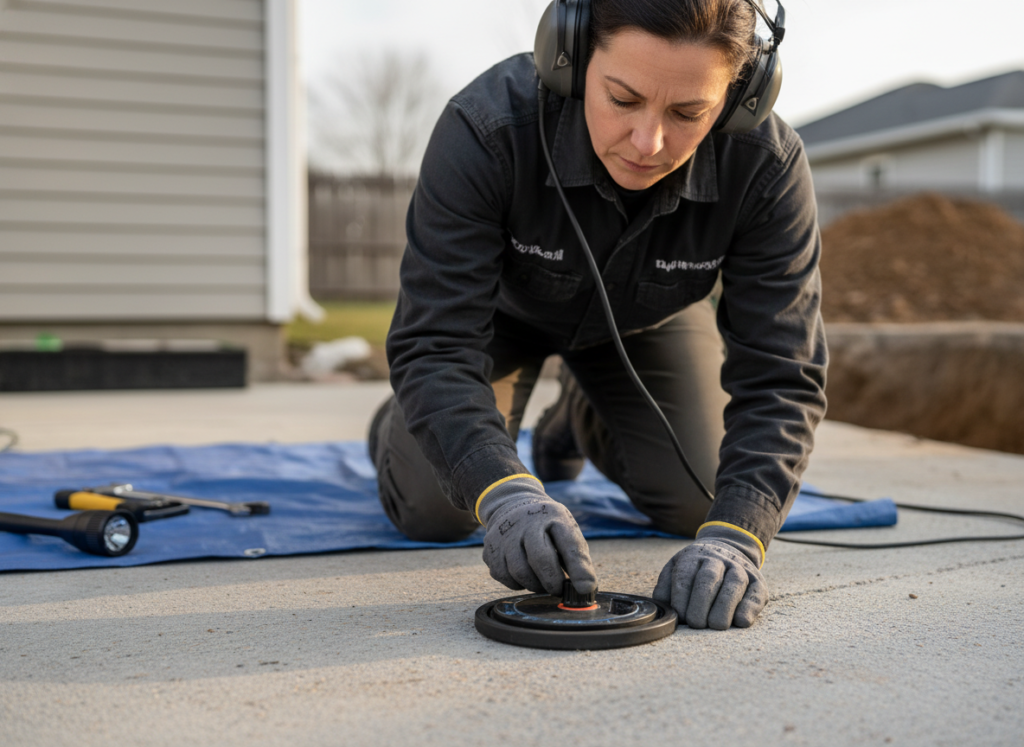
Acoustic listening devices represent one of the most effective non-invasive slab leak detection methods. These specialized instruments amplify the sound of water escaping from pressurized pipes, allowing trained technicians to hear what would otherwise be inaudible. The process works because water under pressure creates a distinctive sound as it escapes through even the smallest opening in a pipe.
Professional plumbers use highly sensitive microphones connected to amplifiers and noise-canceling headphones to isolate the sound of leaking water. By systematically moving the acoustic sensor across your floor, technicians can track the increasing volume of the leak sound until they pinpoint its exact location. This method is particularly effective for pressurized water lines where the escaping water creates sufficient noise.
The accuracy of acoustic detection depends significantly on the technician’s experience and the quality of equipment used. Professionals undergo specific training to differentiate between the sounds of actual leaks and normal water flow through pipes, ensuring precise identification of problem areas.
Electronic Leak Detection
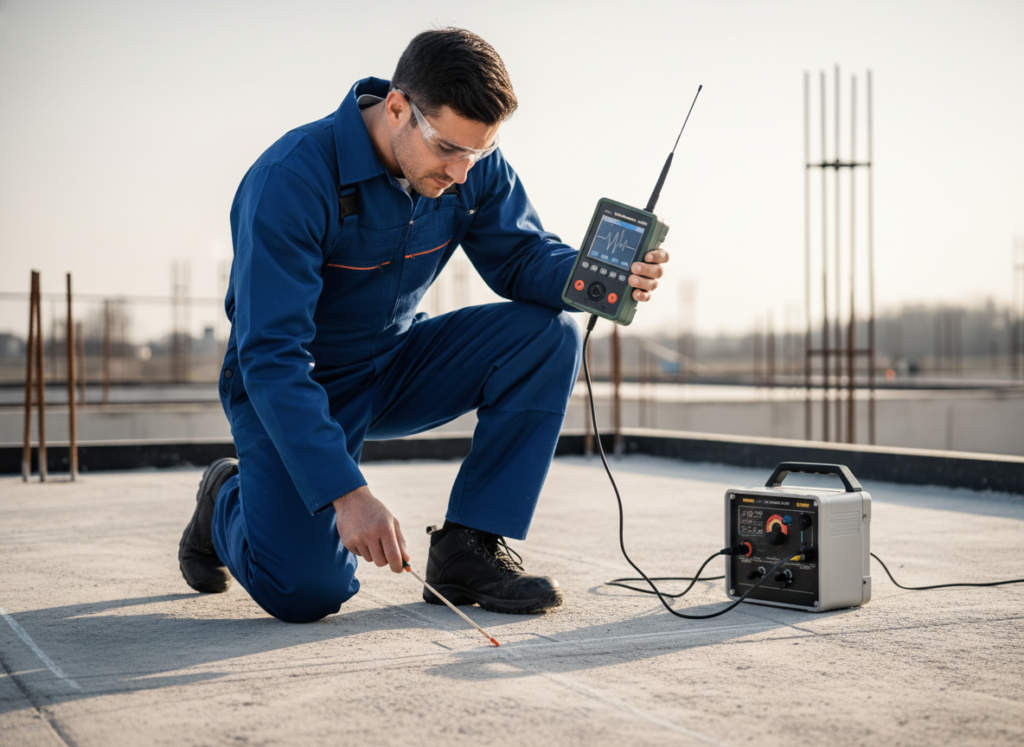
Electronic leak detection utilizes specialized equipment that can trace the path of pipes hidden beneath concrete and identify irregularities that indicate leaks. This technology works through signal tracing, where an electronic signal is introduced into the plumbing system and followed using a receiver that detects the signal through the concrete.
The process begins by connecting a transmitter to your plumbing system, which sends a low-frequency signal through the metal pipes. A technician then uses a receiver that picks up this signal, allowing them to map the exact path of pipes beneath your floor. When a leak is present, the signal pattern changes noticeably, helping identify the precise location of the problem.
This method is particularly valuable for complex plumbing systems where pipes take unexpected routes beneath the foundation. Electronic detection can create a comprehensive map of your under-slab plumbing while simultaneously identifying leak points with remarkable accuracy.
Pressure Testing
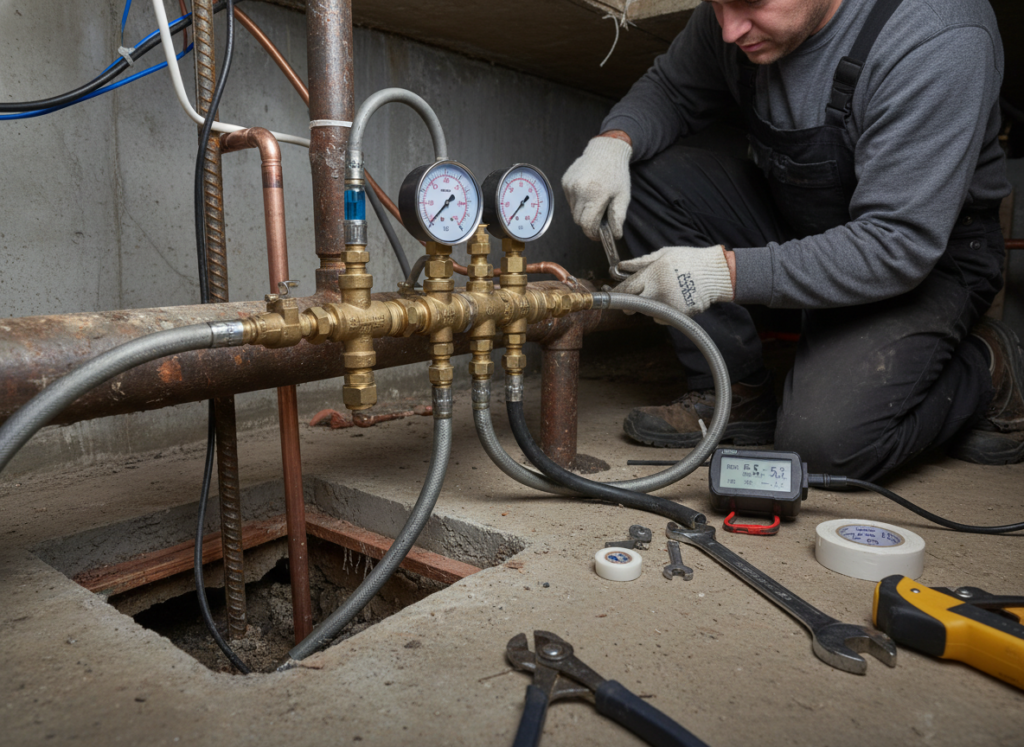
Pressure testing provides definitive evidence of leaks by measuring how well your plumbing system maintains pressure. This method involves isolating sections of your plumbing system and pressurizing them to a specific level. If pressure drops occur when all fixtures are closed, it confirms the presence of a leak.
Professional plumbers use calibrated pressure gauges that can detect even minor pressure changes. By systematically testing different sections of your plumbing, they can narrow down which area contains the leak. This method is particularly useful for confirming the existence of a leak before employing more precise location techniques.
For slab leak detection, pressure testing often serves as an initial diagnostic step that confirms whether further investigation is needed. Once a leak is confirmed, more targeted methods like acoustic or electronic detection can pinpoint its exact location.
Thermal Imaging
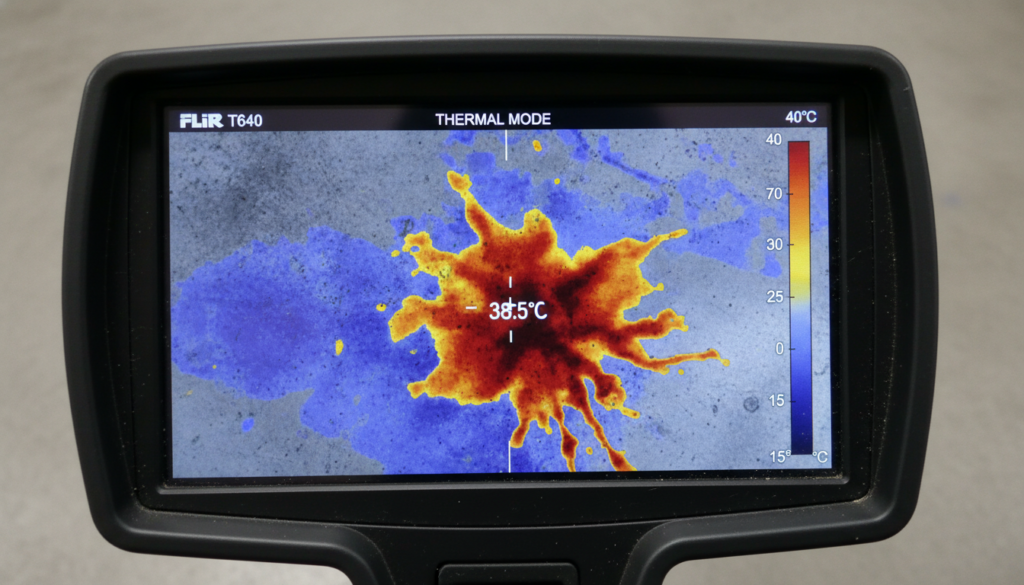
Thermal imaging uses infrared technology to detect temperature variations on your floor’s surface that indicate water leaks beneath. This method is particularly effective for hot water line leaks, as the escaping warm water creates detectable heat patterns on the surface of your floor.
Professional plumbers use specialized infrared cameras that can visualize these temperature differences, displaying them as color variations on a screen. Warmer areas appear as distinct colors (typically red or orange), clearly showing where hot water is affecting the concrete slab temperature. This visual representation makes it easy to identify the general area of a leak.
The advantage of thermal imaging is its ability to quickly scan large areas of flooring to identify potential leak locations. While it may not always provide the precise pinpoint accuracy of acoustic methods, it excels at rapidly narrowing down search areas, especially in larger properties where checking every square foot with acoustic devices would be time-consuming.
Non-Invasive vs Invasive Detection
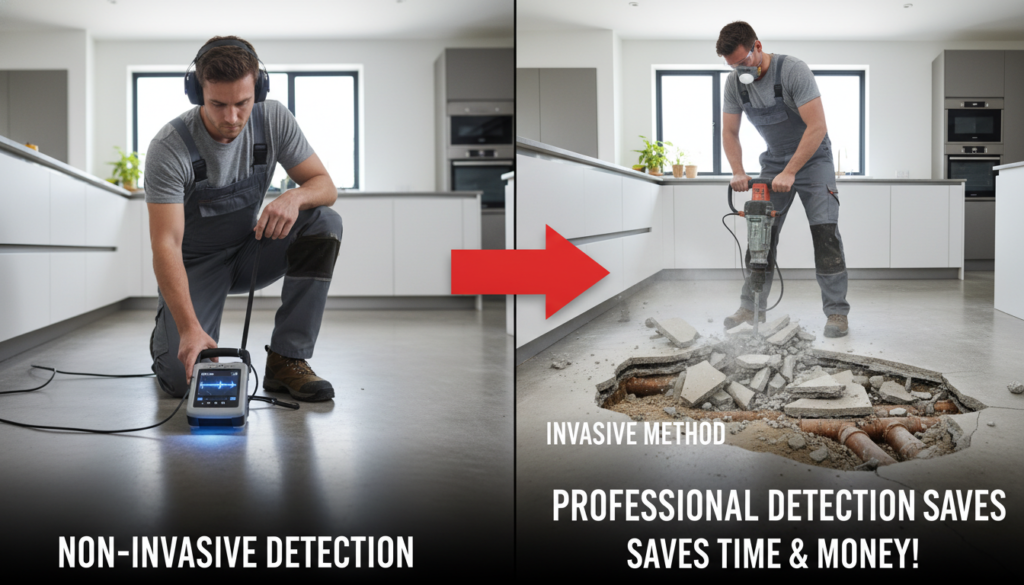
Understanding the difference between non-invasive detection and invasive repair helps homeowners appreciate why professional slab leak detection is so valuable. The diagnostic phase of addressing a slab leak should be entirely non-invasive, using the technologies described above to locate the leak without disturbing your home’s structure. This approach preserves your flooring and minimizes disruption to your household.
The repair phase, however, may require some level of invasive work to access and fix the damaged pipe. The extent of this invasive work depends entirely on the accuracy of the detection process. With precise location information, plumbers can target their repair efforts to the smallest possible area, sometimes needing to remove only a few square feet of concrete directly above the leak.
Minimal surface disruption is possible in several scenarios. When leaks are accurately pinpointed, the repair might require accessing only a small section of flooring. Additionally, some repair methods like epoxy pipe lining or pipe rerouting can sometimes avoid breaking concrete entirely. These alternatives depend on your specific situation and the condition of your plumbing system.
The value of professional detection becomes clear when comparing the alternatives. Without precise location information, plumbers might need to remove large sections of flooring to find the leak through trial and error, significantly increasing both the cost and disruption to your home. Professional inspection ensures that any invasive work is kept to the absolute minimum necessary.
When Detection Becomes Urgent
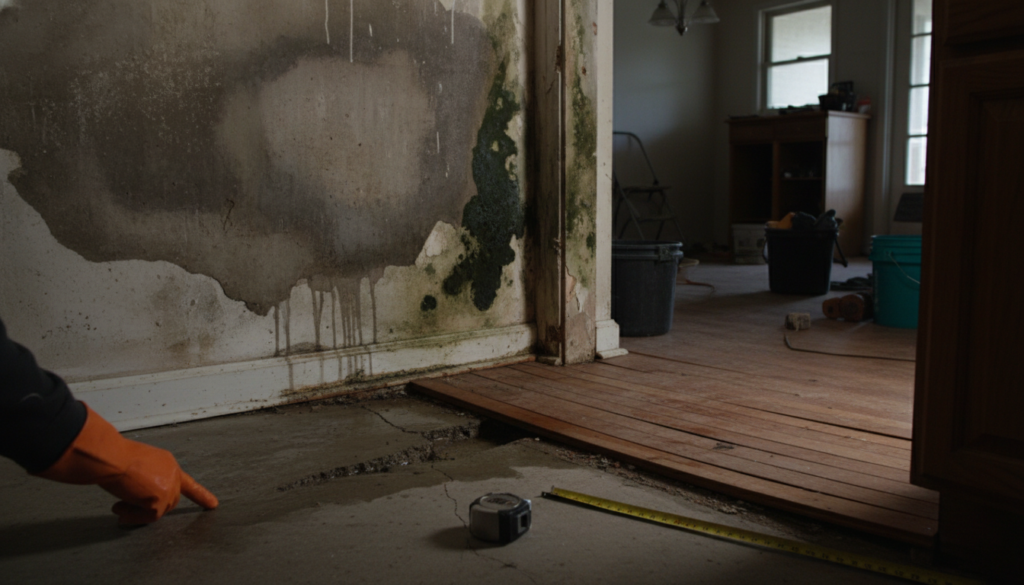
While some slab leaks develop slowly, certain situations demand immediate professional attention. Recognizing these urgent scenarios can help prevent catastrophic damage to your home’s structure and your personal property.
Sudden increases in your water bill without explanation often indicate a significant leak that’s actively wasting water. When combined with other signs like the sound of running water when no fixtures are in use, this suggests a major breach in your plumbing system that requires emergency plumbing attention.
Visible water pooling on floors, damp carpet, or warped wood flooring indicates that water has already saturated the concrete and is now affecting your living space. This moisture can quickly lead to mold growth and structural damage if not addressed promptly. These situations constitute a plumbing leak emergency requiring same-day detection and mitigation.
Foundation movement signs like cracks in walls, sticking doors, or uneven floors suggest that a slab leak has begun affecting your home’s structural integrity. These symptoms indicate that water has been leaking for some time and has potentially eroded the soil supporting your foundation. Professional detection should be sought immediately to prevent further structural damage.
If you notice hot spots on your floor accompanied by unusually high water heating costs, you likely have a hot water line leak. These leaks are particularly concerning as they waste both water and the energy used to heat it, while also potentially causing more rapid damage due to the higher temperature of the leaking water.
Detection vs Repair Costs

Understanding the financial aspects of slab leak services helps homeowners make informed decisions. The detection phase is typically much less expensive than the repair phase, making professional detection a wise investment even if you’re unsure whether you have a leak.
Professional slab leak detection services generally cost between $150-$400, depending on the complexity of your plumbing system and the methods required. This diagnostic fee identifies the exact location of your leak and provides the information needed to plan the most cost-effective repair approach. Many plumbing companies will apply this detection fee toward the cost of repairs if you proceed with their services.
Repair costs vary significantly based on the leak’s location, the extent of damage, and the chosen repair method. Simple repairs might cost $500-$1,000, while complex situations requiring extensive concrete work or pipe replacement can range from $2,000-$10,000. The variation in these costs underscores the importance of accurate detection, which ensures repairs target only the affected area.
Investing in professional detection often saves money in the long run by preventing unnecessary exploratory demolition and ensuring that repairs address the actual problem rather than symptoms. For detailed information about potential costs in emergency situations, visit our emergency plumbing cost page.
When considering whether a slab leak constitutes an emergency requiring immediate attention, review our guide on is a slab leak an emergency to help assess your situation.
Service Areas We Cover
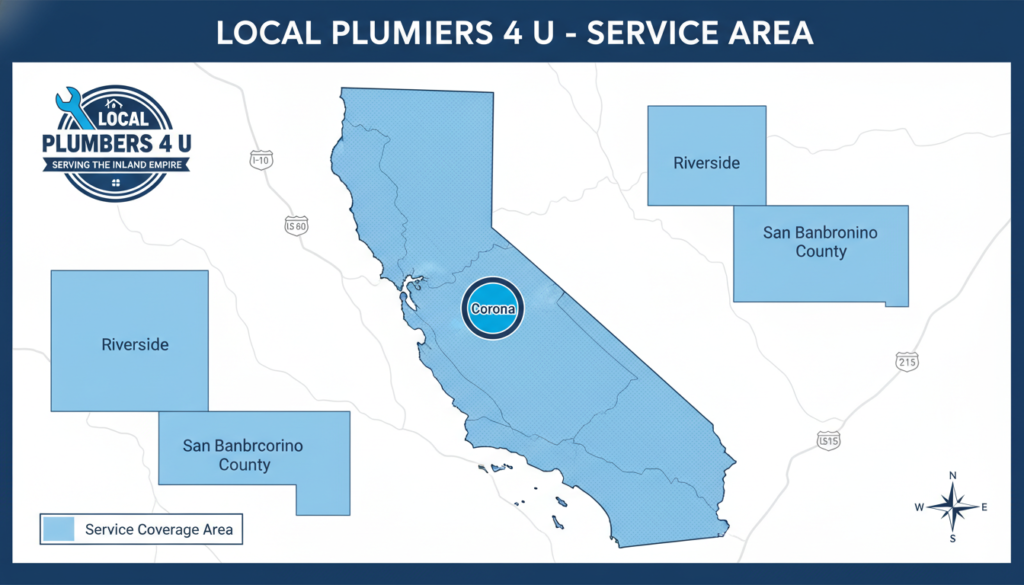
Local Plumbers 4 U provides expert slab leak detection services throughout the Inland Empire region of Southern California. Our experienced technicians are familiar with the unique construction methods and soil conditions that affect homes in these areas.
In Corona, we offer rapid response for slab leak detection, with technicians who understand the specific challenges of homes in this area. Our local knowledge ensures we can quickly identify and address slab leaks in all Corona neighborhoods.
Throughout Riverside County, our team provides comprehensive slab leak detection services using the latest technology. We’re familiar with the various home construction styles found across the county and how they affect the detection process.
San Bernardino County residents can also rely on our professional slab leak detection expertise. Our technicians are trained to address the unique challenges presented by the diverse building styles and foundation types found throughout this region.
Expert Slab Leak Detection When You Need It
Don’t let a suspected slab leak cause costly damage to your home. Our professional technicians use advanced non-invasive detection methods to accurately locate leaks without unnecessary demolition. Call us today at 909-378-9322 or click below to schedule your professional inspection.
Professional Standards in Slab Leak Detection
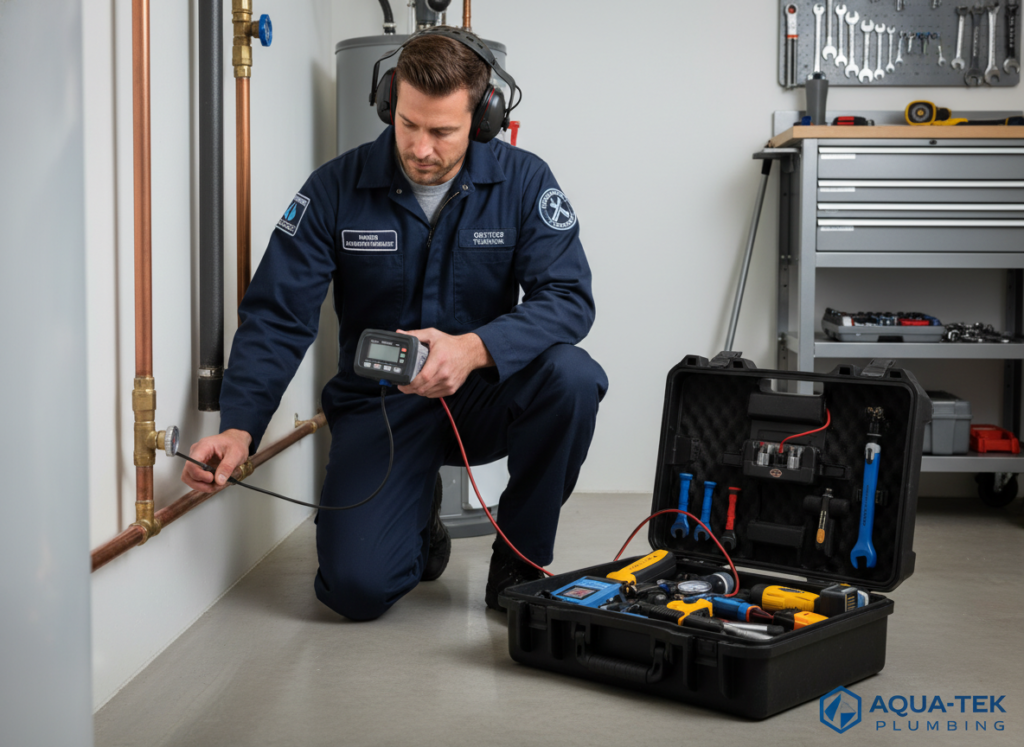
At Local Plumbers 4 U, we adhere to the highest professional standards in slab leak detection. Our technicians receive ongoing training in the latest detection technologies and methods, ensuring they can accurately locate even the most challenging leaks. This commitment to professional excellence is why homeowners throughout the Inland Empire trust us with their slab leak concerns.
Our detection equipment is regularly calibrated and updated to maintain optimal performance. We invest in the most advanced acoustic, electronic, and thermal imaging technologies available, allowing us to offer superior detection accuracy compared to companies using outdated methods. This technology investment directly benefits our customers through more precise leak location and less invasive repairs.
We follow industry best practices established by organizations like the Plumbing-Heating-Cooling Contractors Association (PHCC), which sets standards for professional plumbing services nationwide. These standards ensure that our detection processes are thorough, accurate, and performed with minimal disruption to your home.
When you request an inspection from Local Plumbers 4 U, you can be confident that you’re receiving service that meets the highest industry standards for slab leak detection. Our reputation for excellence is built on years of successful leak detection and customer satisfaction throughout our service areas.
Trust the Experts for Your Slab Leak Detection
Detecting slab leaks requires specialized equipment, technical expertise, and experience that only professional plumbers can provide. At Local Plumbers 4 U, we combine advanced detection technology with thorough knowledge of local construction methods to offer superior slab leak detection services throughout Corona, Inland Empire, Riverside County, and San Bernardino County.
Early detection is crucial for minimizing damage and repair costs. If you notice any of the early signs of a slab leak in a house, don’t wait until it becomes an emergency. Contact our team at 909-378-9322 to schedule professional detection services that will accurately locate the source of your leak without unnecessary damage to your property.
Ready to Solve Your Slab Leak Problems?
Our experienced technicians are standing by to help with professional slab leak detection services. We’ll locate your leak with precision and provide clear repair options to protect your home.