
Did you know that a leak in your home can waste up to 10,000 gallons of water each year? Many of these leaks are caused by corroded pipes. When metal pipes rust, they can harm your water quality and even damage your home.
Spotting problems early can save you a lot of money on repairs. Your plumbing system might show signs of trouble like unusual water color, lower water pressure, or strange sounds from faucets. These signs are important because they often mean your pipes are getting worse.
In places like Inland Empire CA, Riverside County, San Bernardino, and Corona CA, knowing these signs is key. The water quality and age of pipes vary a lot here. This makes it important to check your pipes regularly.
At Local Plumbers 4 U, our experts have seen many cases where catching problems early saved homes. We’re here to help with expert advice and solutions. You can reach us at 909-378-9322 for quick help.
Key Takeaways
- Corroded pipes can waste thousands of gallons of water and lead to costly property damage
- Discolored water, reduced pressure, and unusual sounds are primary warning signs
- Early detection can save homeowners thousands in emergency repairs
- Local water conditions in Inland Empire areas can accelerate pipe deterioration
- Professional assessment is recommended when multiple warning signs appear
- Replacement options vary based on your home’s specific plumbing configuration
Understanding Corroded Pipes: An Overview
Behind your walls and beneath your floors, a chemical battle may be taking place. Your metal pipes face the ongoing threat of corrosion. This silent deterioration process affects millions of homes across America, often progressing unnoticed until significant damage occurs. Understanding the nature of pipe corrosion is your first line of defense in protecting your home’s plumbing system.
Pipe corrosion involves the gradual breakdown of metal materials due to chemical reactions with their environment. Over time, these reactions weaken pipe walls, creating vulnerabilities that can lead to leaks, water contamination, and even complete pipe failure. The process varies in speed and severity depending on several factors unique to your home.
What Causes Pipe Corrosion?
Corrosion doesn’t happen randomly—it results from specific environmental and chemical conditions that attack your pipes’ structural integrity. The primary culprit behind water pipe corrosion is the natural reaction between metal and oxygen in the presence of moisture.
Several key factors accelerate the metal pipe deterioration process:
- Water chemistry (pH levels that are too high or too low)
- High mineral content (in hard water areas)
- Temperature fluctuations (hot water accelerates corrosion)
- Oxygen concentration in water
- Water velocity (fast-moving water erodes protective layers)
| Pipe Material | Corrosion Vulnerability | Average Lifespan | Common Corrosion Type |
|---|---|---|---|
| Copper | Moderate | 50+ years | Pitting, pinhole leaks |
| Galvanized Steel | High | 20-50 years | Uniform, internal scaling |
| PVC/CPVC | Very Low | 50-70 years | Chemical degradation |
| Cast Iron | High | 75-100 years | Graphitization |
Chemical treatments in municipal water supplies, while necessary for public health, can sometimes contribute to pipe deterioration. Chlorine and other disinfectants may react with pipe materials over time, causing damage, mainly in older homes with aging plumbing systems.
How Corroded Pipes Affect Your Home
The impact of corroded pipes extends far beyond simple leaks. When pipe integrity becomes compromised, you may experience a cascade of problems throughout your home’s systems.
Water quality suffers significantly when pipes corrode. Metal particles can leach into your water supply, causing discoloration, metallic tastes, and health concerns. In severe cases, corroded pipes may introduce harmful contaminants like lead or copper into drinking water.
Your home’s efficiency also takes a hit. Corrosion inside pipes creates rough surfaces that restrict water flow, forcing your plumbing system to work harder. This increased pressure can lead to higher utility bills and accelerated wear on water heaters and appliances.
Property damage represents another serious consequence. Leaking pipes can damage walls, floors, and foundations, creating costly repair situations. Left unchecked, severe corrosion may lead to catastrophic pipe failures that flood homes and necessitate emergency interventions.
The cost of preventative pipeline integrity assessment is minimal compared to the expense of emergency repairs and water damage restoration.
Signs of Corroded Pipes to Watch For
Identifying pipe corrosion early can save you thousands in repairs and prevent serious damage to your home. While we’ll explore these indicators in greater detail in the next section, here are the key warning signs that warrant your attention:
- Water discoloration (brown, yellow, or reddish tints)
- Decreased water pressure throughout your home
- Frequent leaks or water stains on walls and ceilings
- Unusual tastes or odors in your water
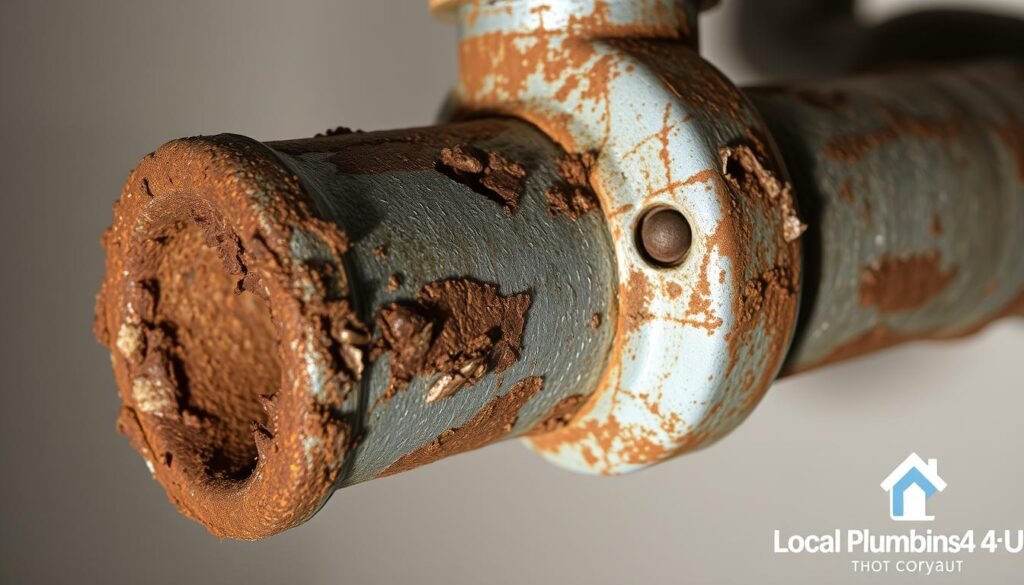
- Visible corrosion on exposed pipes (flaking, dimpling, or color changes)
Regular rust detection on pipes can help you identify problems before they escalate. Simple visual inspections of accessible plumbing can reveal early signs of deterioration, mainly in areas prone to moisture like basements, under sinks, and around water heaters.
Understanding these warning signs empowers you to take action before minor corrosion develops into major plumbing emergencies. The next section will explore these indicators further, helping you recognize when it’s time to call in professional assistance.
Key Signs of Corroded Pipes
Many people overlook the early signs of pipe corrosion. These signs can save you from costly repairs and water damage. Local Plumbers 4 U experts suggest checking your plumbing regularly for these signs.
Discolored Water: The Red Flag
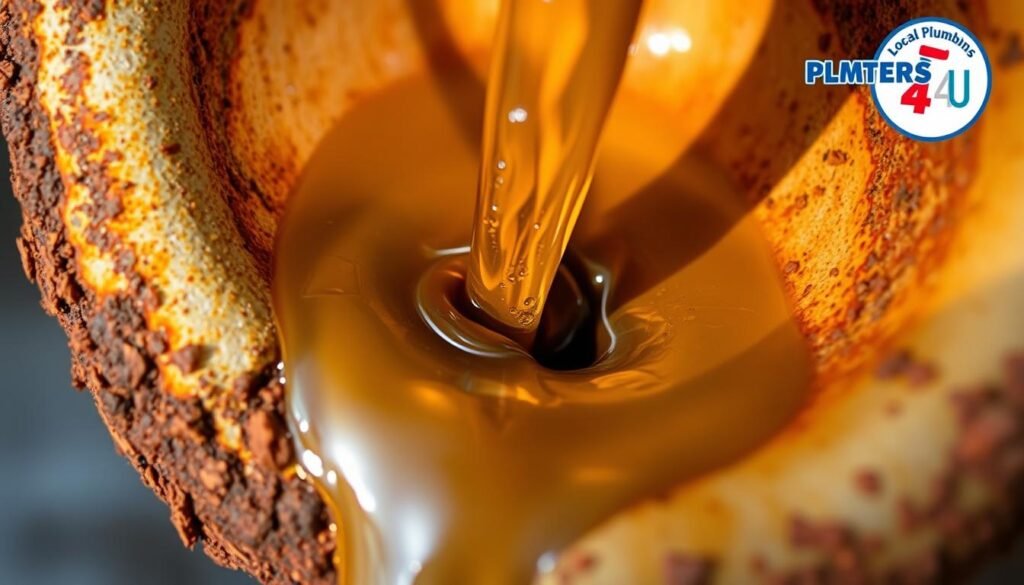
Seeing brown, yellow, or rusty water when you turn on the faucet is a warning. This color change happens when metal from corroded pipes mixes with your water.
Different colors mean different corrosion problems:
- Brown or rusty water suggests iron pipe corrosion
- Blue or green tints mean copper pipe deterioration
- Yellow water signals galvanized steel pipe breakdown
Discolored water also tastes and smells bad. This is not just a cosmetic issue. It can be harmful, which is a big concern in commercial settings.
Low Water Pressure: A Common Indicator
Lower water pressure in your home might mean corroded pipes. Corrosion builds up inside pipes, blocking water flow and lowering pressure.
To check if corrosion is the problem, look for these signs:
- Low pressure in many places in your home (a big problem)
- Both hot and cold water lines are affected (main pipe issue)
- Older plumbing is worse than newer areas (clear sign of corrosion)
Local Plumbers 4 U uses special tools to find where corrosion is worst. This non-destructive pipe evaluation helps fix problems before they get worse.
Persistent Leaks: Don’t Ignore Them
Recurring leaks are a sign of failing pipes. Corrosion makes pipes weak, leading to small leaks that can get worse.
Homeowners should watch for these signs of leaks:
- Water bills that suddenly go up
- Damp spots on walls, ceilings, or floors
- Sound of running water when no faucets are on
- Greener grass or plants over buried pipes
Business owners need to check their plumbing often too. Using acoustic detection technology can find leaks before they damage your building.
Unpleasant Odors: A Warning Sign
Strange smells from your water or drains mean corroded pipes. These smells come from bacteria growing in the corroded surfaces.
Here’s what different smells mean:
- Rotten egg smell: Often means iron pipe corrosion
- Metallic odor: Suggests copper pipe deterioration
- Musty smells: May mean mold in damp areas around leaks
For businesses, these smells can harm your reputation and break health codes. Fixing leaks quickly is key to keeping a good image.
If you see any of these signs, take photos before calling Local Plumbers 4 U. Pictures help them understand the problem better. This makes fixing your plumbing more efficient.
When to Replace Corroded Pipes
Deciding to replace corroded pipes involves looking at several important factors. These factors affect your home’s safety and your budget over time. Minor corrosion might be fixed, but some cases need a full replacement to avoid bigger problems later. It’s key for homeowners in Riverside County and nearby to know when to act.
Factors to Consider for Replacement
The type of pipes you have is a big factor in deciding when to replace them. Pipes made of lead or polybutylene are dangerous and should be replaced right away, no matter their condition.
In Corona and San Bernardino, many homes have old plumbing that doesn’t meet today’s standards. Even copper and steel pipes have a limited life, which is shorter in Southern California’s water.
| Pipe Material | Expected Lifespan | Signs of Failure | Replacement Urgency |
|---|---|---|---|
| Lead | 50-100 years | Health hazards (regardless of condition) | Immediate |
| Polybutylene | 10-15 years | Flaking, brittleness, frequent leaks | Immediate |
| Galvanized Steel | 20-50 years | Rust, dimpling, reduced water flow | High |
| Copper | 50+ years | Green stains, pinhole leaks | Moderate |
| PEX/PVC | 50-70+ years | Cracks, discoloration | Low |
How bad the corrosion is also matters a lot. If you see a lot of rust, discoloration, or flaking, it’s likely time for a full replacement, not just a fix.
How often you need repairs is another thing to think about. If you’re always calling plumbers for leaks, it might be cheaper to replace the whole system. This is true for homes with many signs of pipe problems.
Water quality issues are another reason to replace pipes. If your water is always discolored, tastes metallic, or has sediment, it means your pipes are failing and could harm your health.
Lastly, think about the cost of replacing versus fixing pipes over and over. Replacing your pipes might cost a lot upfront, but it saves money and hassle in the long run. It also keeps your home safe and might even increase its value.
Professional Assessment: Why It’s Important
Before deciding to replace your pipes, getting a professional opinion is key. Plumbers use special tools that homeowners can’t see or do themselves.
Video pipe inspection lets pros look inside your pipes to find hidden problems. This helps avoid unnecessary replacements and makes sure all issues are found.
Pressure testing checks if your pipes can handle water pressure. If the pressure drops a lot, it means your pipes are corroded and need to be replaced.
Water quality tests done by experts can find metals and other harmful stuff in your water. These tests show if your pipes are making your water unsafe.
Plumbers also know about local building codes and how they affect pipes. They make sure any replacement work is done right and fits your area’s needs.
Local Plumbers 4 U’s Replacement Services
When you need to replace your pipes, Local Plumbers 4 U in Corona, Riverside, and San Bernardino has you covered. We focus on using materials that last and improve your water quality.
We use modern, corrosion-resistant materials that can handle local water. Our team is trained in the latest ways to check for corrosion. This ensures your new pipes will last for many years.
- Minimally invasive replacement techniques that reduce damage to walls and floors
- Comprehensive warranty protection on all replacement work
- Follow-up corrosion prevention strategies and maintenance plans
- Financing options to make replacement more affordable
We start with a detailed check of your current system and then make a plan that works for you. We aim to be efficient without sacrificing quality. We usually finish whole-house repiping in just 2-3 days.
“We replaced our 50-year-old galvanized pipes with Local Plumbers 4 U, and the difference in water pressure and quality was immediate. Their team was professional, clean, and finished faster than expected.”
Ready to tackle your corroded pipes? Call Local Plumbers 4 U at 909-378-9322 or visit our website to set up a professional assessment. Our experts will help you decide if you should repair or replace your pipes.
FAQs About Corroded Pipes
Dealing with corroded pipes can raise many questions. Here are answers to the most common concerns we hear from homeowners about pipe corrosion issues.
What should I do if I suspect my pipes are corroded?
If you notice any corroded pipes signs like rusty water, low pressure, or leaks, take these steps:
1. Document the symptoms you’re experiencing (take photos of discolored water or leaks)
2. Turn off water to affected fixtures if you have active leaks
3. Call Local Plumbers 4 U at 909-378-9322 for a professional assessment
Quick action can prevent costly water damage and health risks. Our team will evaluate your pipes and recommend the best repair or replacement options.
How long do corroded pipes last?
The lifespan of corroded pipes depends on several factors:
– Pipe material: Copper pipes typically last 50+ years, while galvanized steel may fail after 20-50 years
– Water conditions: Hard water speeds up corrosion
– Extent of damage: Minor corrosion can be managed with pipeline corrosion prevention treatments
Once corrosion begins, pipes may function for months to years depending on severity. Regular inspections by qualified plumbers can help you plan for replacement before catastrophic failure occurs.
For expert pipe assessment or emergency service throughout the Inland Empire, contact Local Plumbers 4 U at 909-378-9322. Our licensed professionals provide reliable solutions for all your plumbing needs.
FAQ
What should I do if I suspect my pipes are corroded?
How long do corroded pipes last?
Does homeowners insurance cover corroded pipe replacement?
How can I prevent future pipe corrosion after replacement?
What pipe materials are most resistant to corrosion?
What is the typical cost to replace corroded pipes?
Related Plumbing Services in Corona
Looking for a licensed plumber in Corona? We also handle these related services: